Tuesday, February 11, 2020

Siwa's Ammon Stew


Chock-full of comforting, healthy ingredients, this hearty, flavorful stew is sure to brighten up dinnertime. Savor every last drop of this easy one pot and know that, when you're done, clean-up will take no time at all! Just the meal for this changeable weather. We dedicate it to the little known Siwa Oasis in Egypt where celebration of Male homosexuality dates back to the 10th millennium BC .


A wonderful stew of sausage, spinach, and beans will nourish the traveler in all of us. 


Ingredients:
1 tablespoon olive oil
1 pound Bratwurst, casing removed
1 small onion, chopped
4 garlic cloves, chopped
2 carrots, grated
1 (15-1/2-ounce) can great northern beans, undrained
3 cups cream of chicken soup
1 teaspoon Italian seasoning
¼ teaspoon black pepper
2 cups fresh spinach, washed
½ lbs Large pasta, like Campanelle
Directions:


Do your cutting: chop the onion and garlic, grate the carrots, pull the stems off the spinach 


Peel the casings off the bratwurst.

In a soup pot, heat oil over high heat. Add sausage, onion, and garlic, and cook 6 to 8 minutes or until no pink remains, stirring frequently to break up the sausage. Drain.

Return to the pot and add the beans, the grated carrot and pour in the soup. Bring to a high simmer.



Add spinach buy the handful stirring and wilting it until it is incorporated.
Let simmer for 20 minutes.


Then add the pasta and let cook for another 10 minutes*


Be sure to stir it into the liquid immediately after adding it so it does not stick together.

* Notes about soup with pasta
For the best-tasting soup, it’s crucial that the pasta stay firm and doesn’t get mushy. But pasta naturally soaks up water, and it will continue to soak up whatever broth it’s sitting in, even after the soup is done. There are a few ways to minimize this.
Before you add the pasta, make sure the soup is almost done. Everything else in the soup should finish cooking in about the same short time that the pasta needs to cook. Since there are beans in the stew, be sure that they’re almost completely tender before adding the pasta. Here I am using a semolina-based pasta. It won't absorb too much liquid during that amount of time, and adding it uncooked will ensure that the pasta doesn't become too soft and sticky. However if you are using
pasta made with other ingredients, such as buckwheat, soy flour, kamut or quinoa, it is naturally stickier and softer than semolina pasta, so it's smart to cook it al dente on its own before adding.


So honored to be serving my Master Indy

socialslave
To satisfy and restore.
To nourish, support and maintain.
To gratify, spoil, comfort and please,
to nurture, assist, and sustain
..I cook!

Please buy slave's cookbook:

The Little Black Book of Indiscreet Recipes by Dan White http://www.amazon.com/dp/B00F315Y4I/ref=cm_sw_r_tw_dp_vAT4sb0934RTM via @amazon   


===========================
Siwa 

The Siwa Oasis is an oasis in Egypt, 30 mi east of the Libyan border, and 348 mi from Cairo. It is only about 50 mi in length and 12 mi wide.
Siwa Oasis is one of Egypt's most isolated settlements with about 33,000 people, mostly Berbers, who developed a unique and isolated desert culture with a distinct dialect and language different than all others called Siwi.


The Siwa Oasis was of special interest to anthropologists and sociologists because of its historical acceptance of male homosexuality.

Originally it was just known in its ancient role as the home to an oracle of Ammon, the ruins of which are a popular tourist attraction which gave the oasis its ancient name Oasis of Amun Ra. Historically, it was part of Ancient Egypt.

Although the oasis is known to have been settled since at least the 10th millennium BC, the earliest evidence of any connection with Ancient Egypt is the 26th Dynasty, when a necropolis was established. Ancient Greek settlers at Cyrene made contact with the oasis around the same time, and the oracle temple of Amun, who, Herodotus was told, took the image here of a ram. Herodotus knew of a "fountain of the Sun" that ran coldest in the noontime heat. 


During his campaign to conquer the Persian Empire, Alexander the Great reached the oasis, supposedly by following birds across the desert. The oracle, Alexander's court historians alleged, confirmed him as both a divine personage and the legitimate Pharaoh of Egypt, though Alexander's motives in making the excursion, following his founding of Alexandria, remain to some extent contested.

The Siwans are a Berber people, so they were more closely related to nearby Libya, which has a large Berber population, than to Egypt. Consequently, Arab rule from distant Cairo was at first marked by several revolts. Egypt began to assert firmer control after a 1928 visit to the Oasis by King Fuad I, who berated the locals for "a certain vice" and specified punishments to bring Siwan behavior in line with Egyptian morals.


Even in the late 1940s, a Siwan merchant told the visiting British novelist Robin Maugham that the Siwan men "will kill each other for boy. Never for a woman". He reported the Siwan women were "badly neglected", although as Maugham noted, marriage to a boy had become illegal by then.

Siwa was the site of some fighting during World War I and World War II. The British Army's Long Range Desert Group was based here, but Rommel's Afrika Korps also took possession three times. German soldiers went skinny dipping in the lake of the oracle. 


Its historical acceptance of male homosexuality and even rituals celebrating same-sex marriage are traditions that the Egyptian authorities have sought to repress, with increasing success, since the early twentieth century.

The German Egyptologist Georg Steindorff explored the Oasis in 1900 and reported that homosexual relations were common and often extended to a form of marriage: "The feast of marrying a boy was celebrated with great pomp, and the money paid for a boy sometimes amounted to fifteen pounds, while the money paid for a woman was a little over one pound."

Mahmud Mohammad Abd Allah, writing of Siwan customs for the Harvard Peabody Museum in 1917, commented that although Siwan men could take up to four wives, "Siwan customs allow a man but one boy to whom he is bound by a stringent code of obligations."
In 1937 the anthropologist Walter Cline wrote the first detailed report of the Siwans in which he noted: "All normal Siwan men and boys practice sodomy...among themselves the natives are not ashamed of this; they talk about it as openly as they talk about love of women, and many if not most of their fights arise from homosexual competition....Prominent men lend their sons to each other. All Siwans know the matings which have taken place among their sheiks and their sheiks' sons....Most of the boys used in sodomy are between twelve and eighteen years of age."

The archaeologist Count Byron de Prorok reported in 1937 that "an enthusiasm could not have been approached even in Sodom... Homosexuality was not merely rampant, it was raging...Every dancer had his boyfriend...[and] chiefs had harems of boys.

The Egyptian archaeologist Ahmed Fakhry, observed in 1973 that "While the Siwans were still living inside their walled town, none of these bachelors was allowed to spend the night in the town and had to sleep outside the gates...It is not surprising that homosexuality was common...Up to the year 1928, it was not unusual that some kind of written agreement, which was sometimes called a marriage contract, was made between two males; but since the visit of King Fu'ad to this oasis it has been completely forbidden...
However, such agreements continued, but in great secrecy, and without the actual writing, until the end of World War II. Now the practice is not followed."
Despite the many sources for these practices, the Egyptian authorities and even the Siwan tribal elders have attempted to repress the historical and anthropological record. When the Siwa-born anthropologist Fathi Malim included reference to Siwan homosexuality (especially a love poem from a man to a youth) in his book Oasis Siwa (2001), the tribal council demanded that he blank out the material in the current edition of the book and remove it from future editions, or be expelled from the community. Malim reluctantly agreed and deleted the passages in the first edition of his book, and excluded them from the second.

A newer book, Siwa Past and Present (2005) by A. Dumairy, the Director of Siwa Antiquities, discreetly omits all mention of the famous historical practices of the inhabitants.


Wednesday, February 5, 2020

Snowy Day Pork


A snowy day is great for cooking in the oven. Now Memphis might be known as a BBQ town, but here in Saint Louis we've got a claim to that too!~
We are dedicating this to the Swedish Queen Christina, read about her after the recipe. 


Here we have a wonderful Bar Be Que'ed pork roast with the taste of smoke and a tangy flavor that will be such a surprise to Master. After the evening drive home, He will find the aroma of a backyard bar be que right inside His cozy home kitchen. Throw in a couple of sides and you have a winter winner!


Ingredients:
4 lbs pork roast
rub:
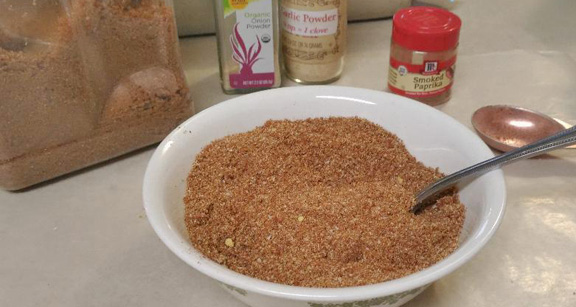
½ cup brown sugar
2 Tbs onion powder
2 Tbs garlic powder
1 Tbs smoky paprika
1 Tbs salt
1 tsp pepper
Your best brand BBQ sauce


Directions:
Open and rinse off the roast and let dry while you pre-heat the oven to 225 degrees.

Line a baking pan with foil, insert a small rack and spray with cooking spray. Pat the roast dry with paper towels. 


In a small bowl mix together all dry rub ingredients, mix with fork and set aside.
ON the counter stretch out a piece of foil over twice the length of the roast.


Place the roast fat side up on one end of foil and lightly score with a sharp knife.
Rub pork all over with dry mixture, working it into the meat with your fingers so that it has a good coating. Use all of the dry mix.


Now fold the foil over the roast and crimp the sides making a seam.
Seal the end flap over as well. If needed, use another piece of foil you want this sealed up so the juices make the sauce as it bakes.


Bake for 5 hours!


Carefully Lift it out and snip a small corner to drain any excess liquid. Now place back on the rack and open back the foil from top of the roast, again be careful.
Turn temp up to 400 degrees.


Top with your bottled BBQ Sauce, smearing it around with the back of a big spoon. Return it to the oven and bake for another 1½ hours. If roast gets too dark, cover back with foil and continue baking. 

While that is on its final cooking time, Fix the mac and cheese, place in an oven proof casserole and sprinkle with extra cheese. 


Rinse and snap the green beans, toss with olive oil and scatter on a foil lined baking sheet.

After the roast has been cooking at 400 degrees for an hour, slide the casserole and the sheet with green beans along side or on different racks. Cook every thing for an additional half an hour.

If a Crust is desired,remove the mac & cheese and the sheet of cooked green beans and switch the oven to broil. Carefully watch as the roast broils for no more than 10 minutes.


Pork should be cooked to 145° F, Check with an insertable thermometer. Remove from oven and let rest for 10 minutes as you set the table. This is an important step as it redistributes the juices in the pork.


What a heart warming meal to fight off the chill of snow!


socialslave

To satisfy and restore.
To nourish, support and maintain.
To gratify, spoil, comfort and please,
to nurture, assist, and sustain
..I cook!

Please buy slave's cookbook:

The Little Black Book of Indiscreet Recipes by Dan White http://www.amazon.com/dp/B00F315Y4I/ref=cm_sw_r_tw_dp_vAT4sb0934RTM via @amazon


===============================
Queen Christina of Sweden


Christina (1626 – 1689), the only surviving legitimate child of King Gustavus Adolphus of Sweden and his wife Maria Eleonora of Brandenburg, reigned as Queen of Sweden. At the age of six, Christina succeeded her father upon his death, but began ruling the Swedish Empire when she reached the age of 18 in 1644.

Christina is remembered as one of the most learned women of the 17th century. She was fond of books, manuscripts, paintings, and sculptures. With her interest in religion, philosophy, mathematics and alchemy, she attracted many scientists to Stockholm, wanting the city to become the "Athens of the North".

Modern biographers generally consider her to have been a lesbian, some assert she was either heterosexual, non-sexual, lesbian, or bisexual depending on which source is consulted. According to historian Veronica Buckley, Christina was "painted a lesbian, a prostitute, a hermaphrodite, and an atheist" by her contemporaries. "in Christina we find a curious squeamishness with regard to sex" and that "a sexual relationship between herself and any man, seems unlikely". Based on historical accounts of Christina's physicality, some scholars believe that she may have been an intersex individual.

Christina wrote near the end of her life that she was "neither Male nor Hermaphrodite, as some People in the World have pass'd me for".

However it is undeniable that Christina left a mark on history and her accomplishments are to be proud of.

Christina was born in the royal castle Tre Kronor 1626. When the baby was born, it was first thought to be a boy as it was "hairy" and screamed "with a strong, hoarse voice." She later wrote in her autobiography that, "Deep embarrassment spread among the women when they discovered their mistake." The king, though, was very happy, stating, "She'll be clever, she has made fools of us all!" King Gustav Adolph recognized her as a female heir, and although called "queen," the official title she held was king.


Christina was educated as a royal male would have been. Chancellor Oxenstierna taught her politics and discussed Tacitus with her. He wrote proudly of the 14-year-old girl that, "She is not at all like a female" and that she had "a bright intelligence". Christina seemed happy to study ten hours a day. Besides Swedish she learned at least seven other languages: German, Dutch, Danish, French, Italian, Arabic and Hebrew.

In 1644, Christina was declared an adult, although the coronation was postponed because of the war with Denmark.

Christina lost no time trying to build up Stockholm's intelectual reputation. In 1648 she commissioned 35 paintings from Jacob Jordaens for a ceiling in Uppsala Castle. In 1649, 760 paintings, 170 marble and 100 bronze statues, 33,000 coins and medallions, 600 pieces of crystal, 300 scientific instruments, manuscripts and books. The art, from Prague Castle, had belonged to Rudolf II, Holy Roman Emperor.

In 1645 she founded Ordinari Post Tijdender ("Regular Mail Times"), the oldest currently published newspaper in the world. She had a firm grasp of classical history and philosophy. Christina studied Neostoicism, the Church Fathers, and Islam.

Already at the age of nine Christina read a biography on the virgin queen Elizabeth I of England with interest. Christina understood that it was expected of her to provide an heir to the Swedish throne. Christina revealed in her autobiography that she felt "an insurmountable distaste for marriage" and "for all the things that females talked about and did." As she was chiefly occupied with her studies, she slept three to four hours a night, forgot to comb her hair, donned her clothes in a hurry and wore men's shoes for the sake of convenience. Her unruly hair became her trademark. Her closest female friend was Ebba Sparre, with whom she shared a bed and possibly a sexual relationship. Christina, said to possess charm, called her "Belle" and most of her spare time she spent with la belle comtesse. She introduced the passion of her youth to the English ambassador as her "bed-fellow" and praised both her mind and her beauty. When Christina left Sweden, she continued to write passionate letters to Sparre, in which she told her that she would always love her.

After reigning almost twenty years, working at least ten hours a day, Christina had what some have interpreted as a nervous breakdown. She suffered with high blood pressure, complained about bad eyesight and pain in her neck. In February 1652 the French doctor Pierre Bourdelot arrived in Stockholm. Unlike most doctors of that time, he held no faith in blood-letting; instead, he ordered sufficient sleep, warm baths and healthy meals, as opposed to Christina's hitherto ascetic way of life. Bourdelot asked her to stop studying and working so hard and to remove the books from her apartments.

In 1653, she made a list of about 6,000 books and manuscripts to be packed and shipped to Antwerp. In February 1654, she plainly told the Council of her plans to abdicate.
Financially she was secured through a pension and revenue from the town of Norrköping, the isles of Gotland, Öland Ösel and Poel, Wolgast, and Neukloster in Mecklenburg and estates in Pomerania.

In the summer of 1654, Christina left Sweden in men's clothing and rode as Count Dohna, through Denmark. Relations between the two countries were still so tense that a former Swedish queen could not have traveled safely. 


At the age of 28, the "Minerva of the North" moved to Rome. The Pope described Christina as "a queen without a realm, a Christian without faith, and a woman without shame."

Being the guest of five consecutive popes, and a symbol of the Counter Reformation, she is one of the few women buried in the Vatican grotto. In all the biographies about Christina, her gender and cultural identity play an important role.

Apartments were assigned to her at the Palace of Fontainebleau, where she committed an action that stained her memory: the execution of marchese Monaldeschi, her master of the horse. For two months she had suspected Monaldeschi of disloyalty; she secretly seized his correspondence, which revealed that he had betrayed her interests. She summoned Monaldeschi into the Galerie des Cerfs, discussing the matter and letters with him. He insisted that betrayal should be punished with death. She was convinced that he had pronounced his own death sentence. "In the end, he died, confessing his infamy." Christina never revealed what was in the letters, but it is supposed to have dealt about her "amours".

Historical accounts of Christina include regular reference to her physical features, mannerisms and style of dress. Christina was known to have a bent back, a deformed chest, and irregular shoulders. Some historians have speculated these may be over-represented. As a result of conflicting and unreliable accounts (some no better than gossip), the way in which Christina is described, even today, is a matter of debate.

In February 1689, the 62-year-old Christina fell seriously ill and received the last rites. She suffered from diabetes mellitus. Christina seemed to recover, but in the middle of April she developed an acute streptococcus bacterial infection, then contracted pneumonia and a high fever. On her deathbed she sent the pope a message asking if he could forgive her insults. She died on 19 April 1689 in Palazzo Corsini at six in the morning.


Sunday, February 2, 2020

Levy's Fruity Chicken Salad

This summery salad is a quick fix. Light and cool it serves well on lettuce, open faced on party rye squares, or in a sandwich. It is to honor a LGBT hero Dan Levy. Read about this up and coming star in a short story after the recipe.


Cans of cooked chicken, an apple, some dried cranberries, and a dressing of non fat Greek style yogurt keeps the calories and temperatures down.


Ingredients :
2½ cups chopped cooked chicken
3 stalks celery, chopped
1 cup chopped apple
¼ cup dried cranberries
½ cup nonfat plain Greek yogurt
½ cup light mayonnaise
2 teaspoons lemon juice
2 tablespoons chopped parsley optional
Salt and pepper to taste

Directions:

Peel and chop apple, drizzle with 1 Tbs lemon juice – this keeps it from browning. The chop the celery into fine pieces.


Place the chicken, celery, apple and cranberries in a bowl and stir to combine.


In a small bowl, stir together the yogurt, mayonnaise, and last 1 Tbs lemon juice. Stir in the parsley if desired.


Add dressing to the chicken mixture and stir to mix well.


Season to taste with salt and pepper. Cover and refrigerate for about an hour to blend the flavors.


So happy to serve this to my Master Indy.

socialslave

To satisfy and restore.
To nourish, support and maintain.
To gratify, spoil, comfort and please,
to nurture, assist, and sustain
..I cook!

Please buy slave's cookbook:

The Little Black Book of Indiscreet Recipes by Dan White http://www.amazon.com/dp/B00F315Y4I/ref=cm_sw_r_tw_dp_vAT4sb0934RTM via @amazon


===============================
Daniel Levy


Daniel Joseph Levy (born August 9, 1983) is a Canadian actor, writer, producer, and television personality.

Levy was born in Toronto, Ontario, in 1983, the son of Deborah Divine and Canadian actor Eugene Levy. He is the older brother of actress Sarah Levy who plays waitress Twyla in Schitt's Creek, in which Levy and his father also star. Levy attended high school at North Toronto Collegiate Institute and later pursued film production at York University and Ryerson University.

Levy started his career as one of the original seven co-hosts on the now defunct MTV Canada flagship series MTV Live. He gained prominence as co-host of MTV Canada's The After Show with Jessi Cruickshank and its various incarnations, such as The Hills: The After Show and The City: Live After Show.

Following The After Show's cancellation and Cruickshank's departure, Levy wrote, produced, and starred in his own Christmas Special for MTV, Daniel Levy's Holi-Do's & Don'ts, and co-hosted the MTV Movie Awards Red Carpet, the X-Factor pre-show, and national coverage of the Vancouver Olympic Games for CTV.

As an actor, he has appeared in a four-episode story arc of the Canadian TV series Degrassi: The Next Generation, which premiered as a TV movie called Degrassi Goes Hollywood.
He has also appeared in the 2012 thriller Offline and in the 2013 film Admission starring Tina Fey and Paul Rudd.


In 2013, Levy formed Not a Real Company Productions (with his father Eugene Levy and principals Andrew Barnsley and Fred Levy). Their first project was a television pilot with CBC, which resulted in Schitt's Creek. Levy also stars in the series alongside his father, sister Sarah Levy, Catherine O'Hara, Annie Murphy, and Chris Elliott. It's the Not a Real Company Productions' first television series. Levy has spoken publicly about his character's portrayal of pansexuality, saying: “I think in certain parts of America, David’s sexual ambiguity was a big question mark. (But) it was issues like that that I find quite exciting.”

For his work on Schitt's Creek, Levy has been nominated for numerous awards, including several Canadian Screen Awards for writing and acting, winning the awards for Best Comedy Series, Best Writing in a Comedy Program or Series in 2016 and Best Comedy Series in 2019.

In July 2017, it was announced that Levy would host The Great Canadian Baking Show with Julia Tayor Ross. Controversy arose when John Doyle of The Globe and Mail criticized the show's first episode in a review on October 30, 2017. Included in the review was a critique of Levy's "feyness" while performing as host and a joke hinting at nepotism at CBC. While acknowledging the importance of criticism in media, Levy called the use of the word "feyness" "offensive, irresponsible, and homophobic". The Globe's public editor, Sylvia Stead, published a statement on November 9 explaining that "Mr. Doyle was not aware that Mr. Levy was gay and he used the term to mean preciousness". She also acknowledged that, despite the dictionary not defining "fey" as a slur, "we need to understand not just the context of words, but how they evolve and are viewed by communities that may be justly sensitive to a range of meanings." Levy and Chan returned as hosts for the series' second season.

In June 2019, to mark the 50th anniversary of the Stonewall Riots, sparking the start of the modern LGBTQ rights movement, Queerty named him one of the Pride50 “trailblazing individuals who actively ensure society remains moving towards equality, acceptance and dignity for all queer people”.

Levy previously avoided labelling his sexual orientation publicly, though in a 2015 interview with Flare he was called "a member of the queer community." In a 2020 interview with Andy Cohen, Levy confirmed he is gay and has been out since he was 18.


The Human Rights Campaign has announced that Emmy ® -nominated showrunner, writer, actor, director and producer Dan Levy will be honored with the HRC Visibility Award at the 2020 HRC Los Angeles Dinner on Saturday, March 28.
Through his advocacy, his creative leadership, and his hilarious, authentic portrayal as David Rose on Schitt’s Creek, Dan Levy is moving LGBTQ visibility forward by inspiring us to embrace all of who we are,” said HRC President Alphonso David. “By creating and inhabiting the world of Schitt’s Creek as a community where people are welcomed no matter who they are or whom they love, Levy is helping take all of us closer to that reality. We are incredibly excited to honor Dan Levy with the HRC Visibility Award at the 2020 Los Angeles Dinner.”