Saturday, June 25, 2016

New Orleans honors


The Superdome in New Orleans  lit up in rainbow colors to honor the 43rd anniversary of the 
Up Stairs Lounge firebombing! 

When this horrendous evening happened
the churches of the city refused to allow memorial services.

Last night they showed their belated respects.

Thank You!


Friday, June 24, 2016

Caned Chicken a Go Go

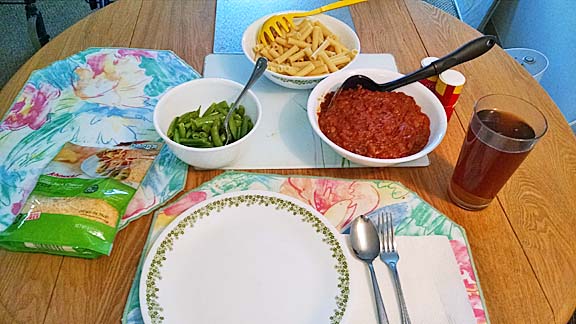
The other day Master mentioned a restaurant He found in Las Vegas called Hash House a Go Go, that name has stuck in slave's mind ever since. This dish has nothing to do with that establishment. Nor does it have anything to do with the Pride event we honor with this dish. It was just a handy name!


43 years ago a horrendous event happened at a gay bar in New Orleans: The Upstairs Lounge. Lets dedicate this dish and remember the victims of that horrible night. Be sure to read the quick write-up on The Upstairs Lounge following the recipe. 


Ingredients

12 oz uncooked pasta (used linguine)
2 tablespoons butter
1 jar sliced fresh mushrooms
1 onion (chopped)
3 cans chopped cooked chicken breast
2 cans (10 3/4 oz each) condensed cream of chicken soup
1 pkg softened cream cheese (room temp)
green peas (left overs – or just use ½ a package)
1/2 teaspoon freshly ground pepper
1/3 cup grated Parmesan cheese


Directions

Heat oven to 350°F. Spray 13x9-inch glass baking dish.

Do the cutting of onion and anything else that needs it. Open the cans and drain them.


Cook pasta as directed on package, using minimum cook time; drain.
Meanwhile, in large skillet, melt butter over medium-high heat. Cook the onions in butter 7 - 10 minutes, stirring occasionally, until tender. Add mushrooms and cook for another 5 minutes until moisture is gone.


In large bowl, mix the onions & mushrooms with the cream cheese.


When combined, add the chicken, the soup, and cooked pasta. Stir this together until mixed. Pour mixture into baking dish.


If you like a touch of crunch topping mix Parmesan cheese with bread crumbs and sprinkle over top.


Bake uncovered 55 minutes or until bubbly.
Let stand 5 minutes before serving.

This can be served as a one dish casserole, no need for additional sides. However a brown & serve bread goes nicely and maybe a small fruit cup to round out the presentation. Again magic from what was in the pantry.


For our music tonight slave has picked a reminder of the song that was sung that fateful night in New Orleans. Be sure to read the quick write up that follows.

So grateful to be serving my Master Indy and grateful for Pride. Our viewpoint today is from the shoulders of heroes!

Socialslave
To satisfy and restore.
To nourish, support and maintain.
To gratify, spoil, comfort and please,
to nurture, assist, and sustain
…..I cook!

Please buy slave's cookbook:

The Little Black Book of Indiscreet Recipes 

by 

Dan White http://www.amazon.com

/dp/B00F315Y4I

/ref=cm_sw_r_tw_dp_vAT4sb0934RTM via 

@amazon


A Dark Night in New Orleans

“OneOrlando” has raised about $7.5 million for family and friends of victims of the Pulse homophobic terrorist attack. This is the largest of the MANY fund raising efforts going on around the world. Our hearts are still heavy from this atrocity. But let me remind you of another carnage that took place in a gay bar. The response 43 years ago was very different.

Let go back for a quick time line of history:

In 1968 The Rev. Troy Perry felt called to return to his faith and to offer a place for gay people to worship God freely. He started the Metropolitan Community Church.


In 1969 the NYC police raided the gay bar Stonewall Inn, this caused riots that lasted nearly a week. Those riots are considered to mark the beginnings of the LGBT Rights Movement.

On Sunday, June 24th, 1973, The LGBT community of New Orleans were celebrating the last day of Pride weekend. This was only the third Pride weekend in history.


Sunday afternoons at the Upstairs Lounge usually meant a sing along around a piano. That Sunday, dozens of members of the Metropolitan Community Church (MCC), got together there for drinks & talk. It was the fourth anniversary of Stonewall. The club hosted free beer and dinner for 125 patrons.

As was the custom, the ending sing-a-long closed with the group singing “United We Stand”.

There was still no Gay Pride Parade in New Orleans. It is said that after the free food and beer ran out about half of the people had drifted off for the night.

Then just a few minutes before 8PM, the door buzzer sounded. Gay bars had to keep the doors locked and have a doorman screen who could get in. This involved unlocking a steel door to the flight of stairs leading down to the ground floor. So the heavy metal door was opened and ALL HELL broke lose!
In less than a second, an explosion of flames engulfed the entire bar. Amazingly some escaped, some through running upstairs, some wiggled out through the bars on the windows falling to the street below. Reverend Bill Larson of the MCC could only make it halfway out. The firefighters left him fused to the window frame. Rev. Larson's body was not removed from the window throughout the initial investigation, and symbolized the city's uncaring attitude towards the mostly gay victims.


Thirty-two lives were incinerated in less than 18 minutes!
The death toll was the worst in New Orleans history up to that time.
It was until this month, the largest mass murder of gays and lesbians to ever be reported in the United States.

Even at first, the media responses to the fire were not sympathetic.

Some family members who knew, refused to claim the remains (little more than ashes). That would be admitting someone in their family was “queer”. The un-identified were buried in an unmarked mass grave. Radio commentators joked the remains could always be buried in FRUIT jars. The press ran quotes like: "I hope the fire burned their dresses off."


The States-Item described the scene this way: "workers stood knee deep in bodies. The heat had been so intense, many were cooked together."

Detective Major Henry Morris, of the New Orleans Police Department said, "Some thieves hung out there, and you know this was a queer bar."

The news coverage was mean. At best, the police response could be described as “uncaring”. However the reaction from religious organizations of New Orleans was a disgrace! One after another of the churches and cathedrals refused to hold memorial services.

Finally, on the first of July a full service was held at St. Mark’s United Methodist Church. Reverend Troy Perry, founder of the Metropolitan Community Church, officiated along with Methodist Bishop Finis Crutchfield.

According to the official story and popular histories: a troubled street hustler who was thrown out of the bar earlier was quickly blamed. He passed a lie detector test and he was never charged, nothing was ever proved. He had been in psychiatric custody for awhile, but had gotten out long before the incident. He was the perfect scapegoat. Was he guilty? He is said to have committed “suicide” the following year.

Finally 3 years ago, the Roman catholic Archbishop of New Orleans, Gregory Michael Aymond, issued a statement of regret that the local church leadership and former Archbishop Philip Hannan had ignored the arson attack at the time. He stated “The church does not condone violence and hatred. If we did not extend our care and condolences, I deeply apologize.”

So today we can be thankful some attitudes have changed. Yet we still face the kind of homophobia that drives a person to mass slaughter!

When I'm asked: “Why have a Pride?” I say look at what we have achieved in the past 43 years. Yet still some churches celebrated the killings! The hatred continues. We had Pride because it took a riot to start demanding citizenship rights – not some kind of “special” rights.

You say that you don't have to parade down the street shouting you are straight. Just be thankful you never needed to!


yprOLmRkc


The Municipal Courts Building in Saint Louis 


This weekend for PRIDE! 

Wednesday, June 22, 2016

Black Cat Baked Omelet for Two

As we continue to count down the days of June Pride Month let us remember another bar raid two years before Stonewall on the other side of the country. Be sure to read a quick write up after this recipe.


Baking an omelet lets it puff up almost like a souffle. This is flavored like deviled eggs to highlight the simple ham. Served at brunch or anytime of day, this will be a hit.


Ingredients:
  • 6 eggs
  • 2 tablespoons mayonnaise
  • 1 tablespoon white sugar
  • 1 tablespoon mustard
  • 1 teaspoon vinegar
  • ½ cup all purpose flour
  • ½ cup milk
  • 5 green onions sliced thin
  • 1/2 teaspoon salt + 1/2 teaspoon ground black pepper
  • 1 tsp horseradish
  • ½ cup diced ham
======================

Directions:

Pre heat oven to 350F, spray an 8 x 8 baking dish and set aside.


Do any cutting, like the tomatoes and green onions.
In a medium bowl crack the eggs (this will make it easier if you get any shell bits in there.)
In a large bowl mix the flour with the salt & pepper.


Crack in the eggs. Add the milk, mayonnaise, mustard, vinegar & sugar. Mix this well.
Stir in the onions & horseradish. Pour this in the baking dish.


Bake for 25 minutes before adding the diced ham. Sprinkle this on top, it will sink in as it continues to cook.


Return to oven for another half hour or until it has puffed up and formed a nice golden crust.


Serve on toast or English muffins with a side of sliced tomatoes and a small dish of mixed fruit. Makes a wonderful brunch dish.

For our music:


So happy to be serving my Master Indy

socialslave
To satisfy and restore.
To nourish, support and maintain.
To gratify, spoil, comfort and please,
to nurture, assist, and sustain
…..I cook!

Please buy slave's cookbook:


The Little Black Book of Indiscreet Recipes 

by 

Dan White http://www.amazon.com

/dp/B00F315Y4Iref=cm_sw_r_tw_dp_vAT4sb0934RTM 

via  @amazon


The Black Cat at Midnight!

At a New Year’s Eve celebration on December 31,1966, The Black Cat became the site of a turning point in LGBTQ history. It was one of several minor scrimmages in the years prior to Stonewall that build the resolve and power to start changing our history.

At this small gay bar in Silver Lake, just outside of Los Angeles, the patrons counted down the seconds to New Years Eve. At midnight,
like millions of others, the couples at the Black Cat kissed each other and welcomed 1967.
Same sex kissing constituted criminal “lewd conduct.” The small group of undercover cops exchange nods. Without warning, an officer seizes a kissing customer by the shoulders. “You’re under arrest!” He pushes the man to the ground. Another cop grabs the bartender. Patrons scream running for the exits. A customer reaches out to open the front door. Another one of the plainclothes officers whacks him on the head with a pool cue. Blood spurts from his ear as it splits open. Another man is flung head-first against the jukebox.
Moments later, a dozen uniformed cops from the LAPD charge into the bar, batons swinging. One patron is clubbed from behind, then kneed in the groin. Two customers run out the back door and over to the New Faces bar just across the street. A couple of plain-clothes officers followed. Just inside the New Faces, the fleeing men are tackled and thrown to the ground.
Shocked, the female bar owner comes forward. “Can I see some identification?” she asks the plainclothes officers. In response, one of the cops hits her, then shoves her to the floor. A cop seizes the bartender, Robert Haas, and yanks him across the bar. Haas is struck, dragged out onto the sidewalk, and beaten so severely that his spleen ruptures.
It was not uncommon for police to resort to violence to bust gay bars. Those faggots never fight back.
Life Magazine had reported that the LAPD often sent out police “dressed to look like homosexuals—tight pants, sneakers, sweaters or jackets” to save the city from the “aggressive” homosexuality, which was only “getting worse” because of increased “homosexual activity.”

Ultimately 16 were arrested and two were beaten unconscious, all for a New Year's Eve kiss!


Local businessman Alexei Romanoff was not happy. “I wasn’t at the Black Cat that night,” he said, “but within hours I heard about the raid. I was absolutely irate. I got on the phone with friends. Everybody was angry. We talked about making a plan to express our outrage.”
“Police raids at gay bars were common. So were beatings and arrests. It was really scary. We were so vulnerable. Kissing was a crime; cross-dressing was a crime. If you were arrested and identified as being gay, you could lose your job, your income, your house, your family.” “We just wanted to be left alone. But that night, something changed.” What changed was that gay people fought back. Two and a half years before the famous Stonewall riots in New York City, a group of brave LGBT's became determined to do something about it.
In response to the police raid, activists organized, on February 11, 1967, one of the earliest known demonstrations in support of LGBTQ civil rights. The incident incited a major civil demonstration of up to 600 to protest the raids. 


The demonstration was planned by a group called P.R.I.D.E. (Personal Rights in Defense and Education). This was the first use of “Pride” associated with LGBT Rights. A Hollywood bar owner agreed to let P.R.I.D.E. organizers meet in the bar during hours when it was closed. A phone tree was set up, with each person calling 10 or 20 others. People were scared and feared further violence from the police. That’s why the protest didn’t happen until weeks after the New Year’s raid.
This event was historic for many reasons. Not only was it the first to use “Pride”, but also it was the starting point for a new publication called “The Advocate”.

The raid and the arrests that accompanied it inspired the first legal argument that gay people were entitled to equal protection under the law. 
 
Also that night a young southern minister, Troy Perry vowed to return to preaching and form a church where LGBT's could worship the God who loved them in peace and open arms. That was to become the Metropolitan Community Church.

On November 7, 2008, the site was declared a Los Angeles Historic-Cultural Monument, HCM No. 939.


Thursday, June 16, 2016

Pantry Pasta

dedicated to the Julius Bar 
 
We continue to honor Pride Month of June by dedicating this meal to an historic gay bar in NYC. Gay bars might turn into an endangered specie. Lets honor them now. 
 

This meal was designed by going to the pantry and using what was already there on hand. It's secret ingredient is not only cheap, on hand but also provides a fantastic taste that you would never expect. Try it.


Ingredients:
1 (12 oz.) package pasta
1 (15 oz) can corned beef hash
1 (15 oz) can Manwich type mix
1 red onion, diced
8 oz mushrooms sliced
salt and pepper to taste
1/4 lb. Grated Cheese

Directions:
Dice the red onion. Rinse and slice the mushrooms.


Cook the pasta according to pkg instructions.


Heat oil in a large skillet. Add onion and cook for about 5 minutes.


Combine the mushrooms and stir for another 5 minutes.


Spoon in the corned beef hash, breaking and stirring it completely apart.


Let this cook for 10 minutes stirring often before adding the can of manwich sauce.


Serve with a side of green vegetables, like sugar snap peas.


What an unexpected surprise. Let your guests try to figure out what the special ingredient (corned beef hash) was.

For our music:

So happy to be the slave of Master Indy

socialslave
To satisfy and restore.
To nourish, support and maintain.
To gratify, spoil, comfort and please,
to nurture, assist, and sustain
…..I cook!

Please buy slave's cookbook:


The Little Black Book of Indiscreet Recipes 

by 

Dan White http://www.amazon.com

/dp/B00F315Y4I

/ref=cm_sw_r_tw_dp_vAT4sb0934RTM via 

@amazon


The Julius


During the June Pride month, we celebrate the Stonewall Riots. An event that is considered to mark the beginning of the modern Gay Civil Rights Movement.

Just a few days ago the world was shocked by the atrocity of an LGBT massacre at another gay bar: The Pulse. A place where young Latinos were celebrating a special Pride Night. They came to dance.

This struck me because the aforementioned Stonewall Inn's main drawing point was that gays could go there to dance. (this was illegal at the time and caused the creation of dancing apart from your partner). Yet still in the backroom the Stonewall allowed you to hold the person in your arms and dance. That simple pleasure of feeling a living heartbeat, of hugging and swaying to the music was NOT ALLOWED for LGBT's

In the LGBT community the “gay bar” holds a special place. Much akin to the place a hair salon has in the Africian-American community or a church. It provides a sanctuary, a gathering place, an area where you are allowed to be you.

Which brings us to the bar called “The Julius”.
The Julius is in Manhattan's Greenwich Village. It is often called the oldest continuously operating gay bar in New York City; however, for most of its existence, gays were not wanted.

By the late 1950s it was attracting many gay patrons. At the time the State Liquor Authority had a rule that ordered bars not to serve liquor to the disorderly: (“homosexuals” by definition were considered disorderly). Bartenders would often evict known LGBT's. Despite this, gay men continued to be a large part of the clientele into the 1960s. The management of Julius did not want it to be known as a gay bar (and lose their liquor license) so they continued to harass them.

The Sip-in
On April 21, 1966 members of the New York Chapter of the Mattachine Society staged a "Sip-In" at the bar which was to change the legal landscape.

Three members planed to identifying themselves as homosexuals before ordering a drink in order to bring court scrutiny to the regulation. The three were going to read from Mattachine stationary "We are homosexuals. We are orderly, we intend to remain orderly, and we are asking for service."


Dick Leitsch, the society's president, John Timmons and Craig Rodwell went to Julius, where a clergyman had been arrested a few days earlier for soliciting sex. A sign in the window read, "This is a raided premises." The bartender initially started preparing them a drink but then put his hand over the glass which was photographed. The New York Times ran a headline the next day "3 Deviates Invite Exclusion by Bars."

The Mattachines then challenged the liquor rule in court. The ruling was that gays had a right to peacefully assemble. This undercut the SLA contention that the presence of gay clientele automatically was grounds for charges of operating a "disorderly" premises. With this right established a new era of licensed, legally operating gay bars began.

In 2012, the New York State Division for Historic Preservation determined Julius eligible for listing on the National Register of Historic Places. The letter of eligibility stated, “The building meets the criteria for listing in the area of social history for its association with the LGBT civil rights movement.”

So here's to the Julius, the Stonewall, the Pulse and to any other LGBT gathering place. These special “civic” centers hold an important place in our hearts and in our liberties.