Friday, February 11, 2022

Cooking sprays


There’s a Difference Between “Nonstick” and “Baking” Spray

The difference is flour. Both sprays are nonstick, no matter what kind of oil, propellant, or lecithin they use. However, the flour particles in baking spray create an extra gap between the metal and the pastry, so everything releases easily. This little gap also insulates the batter, so it doesn’t cook as fast.

To make the difference clear, most recipes refer to nonstick spray as “vegetable oil spray”and baking spray as “baking spray with flour.”

Buttering and flouring still works just fine. However you will find that baking spray in the nooks and crannies of the more intricate bundt pans is worth it. Your cakes will slide out with ease. And if a baking recipe specifies baking spray with flour, use it!


If you don’t have baking spray, don’t worry. You can make a suitable stand-in by mixing 1 tablespoon of melted butter and 1 tablespoon of flour into a paste and brushing it inside the pan.

The use of cooking sprays is not recommended for use on non-stick cookware as cooking sprays burn at lower temperatures and will damage the non-stick coating of your product. An invisible buildup will impair the nonstick release system causing food to stick.


Cooking sprays like PAM contain something called lecithin. While it's harmless enough to use on most cookware, lecithin has the unfortunate ability to stick to a nonstick coating. It sticks so much that it builds up and becomes very hard to remove, eventually degrading the cooking surface and causing food to stick. Using cooking spray is "a surefire way to ruin your skillet's nonstick coating."

Skip the cooking spray and opt for a refillable manual oil mister, which can be filled with any cooking oil you prefer. You can fill it with your favorite kind of cooking oil and KNOW what is in it!

One other thing to keep in mind when working with nonstick pans is that when you do add the oil or whatever fat you prefer, do it right when you put the pan on the heat. Putting grease in a cold nonstick pan helps it work better and cuts down on any potentially harmful fumes.

Sometimes, you’re better off using nonstick spray alternatives like butter, shortening, oil or lard.

If your recipe calls for parchment paper, give the pan a quick spray with cooking spray first. The spray will hold the parchment in place, keeping it from sliding around as you pour in the batter.

Our favorite alternative use for cooking spray is to spray our measuring cups. It keeps stubborn, sticky ingredients like honey or peanut butter from sticking to the inside of the cup. You can also spray a box grater before grating cheese to make cleanup a breeze.

Spray an avocado with nonstick cooking spray to create an oxygen-proof barrier. It works better than rubbing on oil or wrapping the avocado with plastic wrap.

Remember: cooking spray is usually made with neutral oils, and it won’t help create layers of flavor in your cooking. When sautéing or searing meats and vegetables, use olive oil or butter for a more flavorful experience.


Most brands of cooking spray contain soy lecithin. If you’re cooking for someone with a soy allergy, you’ll want to use another cooking oil.


Clean-up!

Cooking spray residue is the remaining yellow-red substance that your food did not soak up. It’s the remnants of the chemicals and oils that are cooked into your utensils. The gummy texture and odor are enough to put anyone off!


Removing residue from non stick pans:

To remove the grease.

  • Mix equal parts of baking soda and water to make a paste and apply it onto your pan, especially concentrating on areas where the cooking spray residue has settled.

  • Scrub the paste gently onto the pan’s surface, using a soft sponge, non-scratch dish brush or clean wash-cloth.

  • Rinse the pan under lukewarm water and follow with another round of mild dish-washing soap if needed.

  • Dry your non-stick pan with a soft towel. 


Removing Cooking Spray from Glass Or Stone Pans

They are the hardest utensils to clean cooking spray residue from. Cleaning glass cookware and stoneware can take some time and is a bit frustrating. Unlike other surfaces, the spray is more adherent on these.

First, let your cookware cool properly. Remove all food particles and gently wash your pan with mild detergent.

To remove the greasy residue, here’s what you will do:

  • Mix equal parts of vinegar (white vinegar and apple cider vinegar work the best to cut through grease!) and water and soak your pan in this solution for 10-15 minutes.

  • While the pan soaks, use a soft dish brush or sponge to scrub the pan’s surface thoroughly.

  • Rinse the pan thoroughly and wash with a mild detergent to get rid of the smell of vinegar.

  • Dry the cookware with a soft towel. 


Removing Cooking Spray from Silicone Baking Pans

Here’s what you need to do:

  • Make a paste using baking soda and water until it forms a semi-thick paste and then rub a thick coat of it over your silicone pan.

  • Wait for the baking soda to dry – this could take a few hours.

  • When the baking soda has dried, gently scrub the paste off using a damp sponge and lukewarm water.

  • Dry with a towel.


Removing Cooking Spray from Stainless Steel Pans

To get rid of the grease:

  • Rub white vinegar on the pan using a soft cloth or sponge. You can also fill an empty spray bottle with white vinegar and spray it on the stainless steel surface. Leave the pan to sit for 5 – 10 minutes.

  • Sprinkle baking soda powder on the pan’s surface, focusing on the greasy residue mostly.

  • Using hot water, a soft sponge and mild dish soap, scrub the stainless steel pan thoroughly until the grease cuts through.

  • Rinse the pan thoroughly and wash once more with a clean sponge.

  • Wipe the pan with a clean towel to remove any soapy residue and wipe to dry.


 Removing Cooking Spray from Cast Iron Pan

Salt: Begin by wiping your cast iron using paper towels to get rid of as much grease as you can. Add a hefty amount of salt and scrub the cast iron surface using a non-corrosive sponge or brush. Rinse your pan well, dry it on a lit stove, and follow by greasing it all over.

  • Baking Soda and Vinegar: If the cooking spray residue is extremely stubborn, begin by wiping as much of it with dry paper towels. Follow by spraying some white vinegar and sprinkling baking soda on the pan’s surface. Use a non-corrosive sponge or soft-bristled brush to scrub the surface. Rinse the pan thoroughly and wipe off any excess grease using paper towels. Dry on a hot stove.

NOTE: Avoid using soap on your cast iron or soaking it in solution or water! You’ve probably noticed I did not include any cleaning method that required soap or soaking. It’s the worst thing you can do to your precious cast iron!


Thursday, February 10, 2022

Matelotage Chicken in Creamy Rum Sauce

In the 17th and 18th century, Matelotage (MAT – loo- taz) was the term used for a same-sex civil union among sailors, in particular pirates! Since this dish is roasted in a spiced rum, I thought it fitting to tell about the true story of The real Pirate Captain Henry Morgan. Besides this is such a fantastic dish that is perfect for the changing weather!


Chicken thighs, pan roasted in a creamy rum sauce will warm yer “timbers” and offer a great topic of dinner conversation about a history you were never told about.


Ingredients

  • 4 chicken thighs

  • Kosher salt to taste

  • 2 TBS olive oil

  • 3½ oz mushrooms

  • 4 TBS flour

  • ½ cup Spiced Rum

  • 1 can evaporated milk

  • C chicken stock

  • 1 TBS butter

  • 1 TBS plain Greek-style yogurt

  • 2 tsp chopped rosemary or sage

  • ½ tablespoon finely chopped parsley, to finish

Directions:


Set the chicken out to come to room temperature, about 30 mins and sprinkle with corn starch to dry out the skin. Season the chicken thighs aggressively with salt.

Set a Dutch oven over medium high heat, and swirl the olive oil into it. Add the chicken to the pan, skin-side down. Let them cook until a golden brown, crisp on one side and just kissed by the heat on the other, approximately 30 minutes total. Remove the meat to a plate.

Rinse the mushrooms well and let dry while the thighs cook.

Discard all but 2 TBS of fat in the pan and add the mushrooms, tossing to coat them with fat. Cook, stirring often, until the mushrooms just begin to soften, approximately 3-4 minutes, then sprinkle with flour. Stir well to coat. Add the spiced rum, and cook it on very low heat until the alcohol has evaporated and the mushrooms are glossy.

Scrape the mushrooms to the sides of the pan, then return the chicken pieces, arranged in a single layer if possible. Pour the can of evaporated milk around the chicken. Lower heat to medium, allow the mixture to come to a low simmer, then put a lid on the pan and allow the mixture to cook slowly until the meat has cooked through, approximately 15 minutes.

Remove the lid from the pan, and transfer the chicken pieces to a platter to rest. Turn the heat to medium high, and allow the liquid to reduce by 1/3, then add the chicken stock and stir to incorporate. Let this mixture simmer for a minute or 2 until it starts to thicken, and swirl again to combine.


Continue cooking the sauce until it can coat the back of a spoon, approximately 2-3 minutes more, then stir in the butter, yogurt and chopped sage and stir to combine. Turn the heat off, stir one more time and then return the chicken pieces to the pan. Spoon some sauce over the chicken, sprinkle with the parsley and serve.

Serve this with some roasted green beans and maybe green peas.

Avast ye buccaneers, as ye eat, remember to honor yer fallen breathern.

Tomorrow we sail for adventure and booty! Arrrrr. Them's that die are the lucky ones!

So honored to be serving my captain, Master Indy.


For our music: https://www.youtube.com/watch?v=sGWs1HK8iDU Last Farewell


socialslave


To satisfy and restore.

To nourish, support and maintain.

To gratify, spoil, comfort and please,

to nurture, assist, and sustain

..I cook!


Please buy slave's cookbook:


The Little Black Book of Indiscreet Recipes by Dan White 

 http://www.amazon.com/dp/B00F315Y4I/ref=cm_sw_r_tw_dp_vAT4sb0934RTM via @amazon


=============================

Swashbuckling Gay Pirates

Matelotage (MAT – loo- taz) was a same-sex civil union among sailors, in particular pirates, in the 17th and 18th century. An economic partnership, "matelots" would agree to share their incomes, and inherit their partner's property in the case of their death.


The lesbian and gay pirates of the 17th century lived believing in the principle that all people are equal and deserve equal rights and opportunities. They even had a form of health insurance! Piracy was a world apart, and one where homosexual couples may have been the norm, not the exception.


Same-sex action and the sea have long gone together. Captains on navy and merchant ships must have accepted, if not engaged in, gay sex. But technically it was illegal in many navies. Britain’s Royal Navy punished ‘sodomy’ or ‘buggery’ with lashes and even hanging.


Piracy offered a release from sexual restrictions alongside society’s other rules. Pirates consciously separated themselves from the rest of society. Some engaged in salt-water baptisms, gave themselves new names or toasted each other with seawater to mark their new life together. And they embraced the all male world they joined.


Most of our modern pirate myths stem from the Golden Age of Piracy, from the 1650s to the 1730s. It was born on the island of Hispaniola (which is nowadays Haiti and the Dominican Republic) in the Caribbean.


By 1605, Spain had abandoned its colonies in the impoverished north of the island. So runaway slaves, mutinous soldiers and sailors, almost anyone who had a reason to hide, could find safe haven there. Initially they hunted pigs and cattle, which they smoked over a wooden fire called ‘boucan’. That earned them the name ‘buccaneers’.


It was an almost entirely male society, so they lived in same-sex couples.

Eventually, the Spanish persecution forced the buccaneers to move to the smaller island of Tortuga, off the north coast of Hispaniola. This was more defensible but had even fewer natural resources. So piracy became their main source of income.

The real Captain Henry Morgan was a privateer – a state-sponsored pirate. And before he attacked Panama in the 1670s, he drew up an amazing contract for his crew. If they lost a hand or foot in the battle, they would get 600 pieces of eight compensation. Both legs were worth 1,800 pieces of eight, 200 for one eye and 2,000 if they became totally blind.

But they didn’t just have health insurance. A form of same-sex civil unions, called matelotage, was also common.


Buccaneer Alexander Exquemelin wrote: ‘It is the general and solemn custom amongst them all to seek out… a comrade or companion, whom we may call partner… with whom they join the whole stock of what they possess.’


Your partner was called a ‘matelot’, which can also be translated as bunkmate. It’s possible the relationships started with one man selling their services to another, to satisfy debts, get food or for protection. But it went deeper than that. If one matelot died, his partner inherited his property and share of the booty. Pirates respected matelotage enough that they wouldn’t interfere with the relationships.

The contemporary writer Captain Johnson, who may be the same person as Daniel Defoe, records the depth of these pairings. He says one pirate turned privateer drowned rather than abandon his partner on a sinking vessel.


In 1666 Morgan was made Colonel of the Port Royal Militia and elected Admiral by his fellow privateers. The ‘king of the privateers’ was then appointed Commander-in-chief of all Jamaican forces in 1669, and by 1670 he had 36 ships and 1800 men under his command.


In 1671 he led an attack on Panama City, the capital city of Spanish America and reputed to be one of the wealthiest cities in the world, a great prize for privateers. Although outnumbered by the Spanish, Morgan’s reputation preceded him; the defenders fled and the city fell, burning to the ground.

Even the “Dreaded Private Roberts” had a famous affair with a surgeon called George Wilson who volunteered to join the pirates when they took his ship.

When separated for about five months, both men were excited by this reunion. Witnesses later said Wilson was ‘very alert and cheerful’ to see Roberts. And he borrowed ‘a clean shirt and drawers’ to look smarter for the pirate captain.


Once on Roberts’ ship, Wilson got himself elected senior surgeon and became intimate with the captain. One account says: ‘They two often said that if they should meet with any of the Turnip Man’s ships [English King George I] they would blow up and go to hell together.’


There were plenty of other same-sex couples in the pirate world.

The history is rarely told. “They” have tried for centuries to hide all traces of gay people from us growing up. But the romanticized idea of gay pirates continues to inspire us.


Wednesday, February 9, 2022

Loco Moco

 Loco Moco (loh-koo moh-koo) is a big meal consisting of a heap of white rice topped with a hamburger patty smothered in onion gravy and a Sunnyside-up egg.  This Hawaiian dish is popular for breakfast, lunch, or dinner.

It can also be made with spam which is very popular in the islands.

According to the story, the dish was created for teenagers who wanted something different from typical American sandwiches and less time-consuming than Asian food to eat for breakfast.

Ingredients

1lbs ground beef

1/3 cup panko

1/3 cup, finely minced onion

1 tsp Worcestershire sauce

½ tsp salt + ¼ tsp pepper

2 tsp oil

½ sliced yellow onion

2 Tbs butter

2 Tbs flour

1 cup beef stock


2 large eggs


Directions:

Slice the onion thin

Add the ground beef, panko, onions, oyster sauce, Worcestershire sauce and black pepper to a bowl and mix until well combined.

Split the mixture into 4 pieces and form them into 4 patties that are about a 3/4-inch thick.

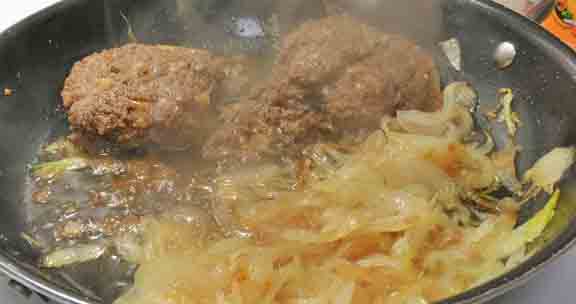
Heat the oil in a sauté pan over medium heat, and then add the onion slices. Let cook until transparent and starting to turn brown. Remove to plate.

Add oil if necessary then the patties and fry until they have a brown crust on one side (about 2½ minutes).

Flip the patties and fry until they're cooked through (another

2½ minutes).


While that is frying, heat another sauté pan, add a bit of oil and fry the eggs however you like them. Traditionally they are served sunny side up.

Swap the patties for the onion and melt the butter in the center along with the flour. Fry the roux until a medium brown.

Whisk in the beef stock and soy sauce.


Once the mixture is smooth and free of lumps, put it back on the stove and bring to a boil, cooking until the gravy is nice and thick. Return the meat patties to the gravy to return to heat.


To plate the Loco Moco, first put down a mound of hot rice. Top with the beef patties and then spoon on the onions gravy. Finish off with the egg on top, so the yolk will drip over everything.


For our music: https://www.youtube.com/watch?v=zYWuzwHklCE Hello Stranger


Honored to serve my Master Indy.

socialslave


To satisfy and restore.

To nourish, support and maintain.

To gratify, spoil, comfort and please,

to nurture, assist, and sustain

..I cook!


Please buy slave's cookbook:


The Little Black Book of Indiscreet Recipes by Dan White http://www.amazon.com/dp/B00F315Y4I/ref=cm_sw_r_tw_dp_vAT4sb0934RTM via @amazon

Saturday, February 5, 2022

Cold Pan Chicken Thighs

Starting the chicken skin side down in a cold skillet lets the fat render slowly and results in the crispiest skin imaginable, you just have to try this to see. This technique can be used for chicken breasts and other meats also.

Chicken thighs are cheap, more flavorful than their popular cousin the breast, and have the perfect ratio of juicy meat to crunchy, golden skin. Seriously overcooking them would take many hours and possibly a blow torch.

Make sure to buy skin on, bone in thighs. Cooking proteins with the bone in is a tried and true trick to real flavor.

Ingredients

4 bone in, skin on chicken thighs
1 T kosher salt
1/2 tsp ground black pepper

Directions:

Set out the chicken thighs to come to room temperature. (about 30 mins) Pat them dry with paper towels.

Place a rack in top third of oven; preheat to 325º.


Pull back the skin and season the meat underneath with salt. Leave skin attached so that you can carefully stretch the skin back to cover the meat. With the point of a sharp knife make a couple of small slits into the skin. Spray the skin lightly with cooking spray.


We start this over absolutely no heat at all. The reason is that if you allow the chicken skin to slowly render as the pan comes up to temperature, then you’ll end up with the finest crisp skin instead of a floppy, flabby mess.

Lay each thigh, skin side down in a large, dry cold skillet. Place pan over medium high heat and let chicken cook, undisturbed for 8–11 minutes.

While that browns, line a baking pan with foil and spray lightly.

Try to resist your urge to peek and let time do its thing. As long as you keep the heat moderate then you won’t risk burning anything. And when you do start to pull up a corner, know that it wont budge until it’s good and ready. If the skin is threatening to tear, give it a few more minutes and then try again.

Fair warning: this can splatter a slight bit. You do NOT cover the chicken as it cooks. That would create steam and turn that nice crisp skin into a floppy, soggy mess. But honestly, your stove top could use a wipe down anyway, right?


Transfer thighs, beautiful skin side up, to a foil lined baking pan.

Roast until chicken thighs are cooked through (an instant-read thermometer inserted into thickest part near the bone should register 170°), juices run clear, about 25 minutes.


Carefully remove from oven and let rest 5 minutes. If this goes longer than expected and the nice skin starts to wrinkle, just pop it back in the oven for a few minutes to stretch it back.

While the chicken roasts, it gives a good time to do a side dish! Here we did a chicken flavored rice on the stove top.

Serve with a nice green vegetable. I like to do that in the microwave WHILE the chicken rests, a great way to time things out.

For our music: https://www.youtube.com/watch?v=ZmUdd8G0ToA Sway

So honored to be serving my Master Indy

socialslave


To satisfy and restore.

To nourish, support and maintain.

To gratify, spoil, comfort and please,

to nurture, assist, and sustain

..I cook!


Please buy slave's cookbook:


The Little Black Book of Indiscreet Recipes by Dan White 

 http://www.amazon.com/dp/B00F315Y4I/ref=cm_sw_r_tw_dp_vAT4sb0934RTM via @amazon

Wednesday, February 2, 2022

D'Anne's Roasted Stew

Tonight's hearty stew is named for LGBT hero Denise D’Anne an early advocate for rights and recognition. Read about her in a quick article after the recipe.

Here is a simple recipe that bakes in the oven so you don't have to stand over it to get that old time taste. It is just in time for the latest storm, stay warm!

Ingredients:

¼ cup flour, or as needed

1 tsp paprika

2 lbs beef roast

2 tablespoons olive oil

2 onions, chopped

1 stalk celery, chopped

2 carrots, peeled and chopped

4 cloves garlic, minced

2 cups beef broth low salt

salt and pepper to taste

Directions


Take the roast out of the refrigerator and sprinkle well with salt. Let sit to come to room temperature, about 30 mins.


Chop the onion, celery and carrots, trim any big places of fat off the roast.


Remove top rack in oven to make sure the dutch oven fits, then preheat to 300 degrees F .

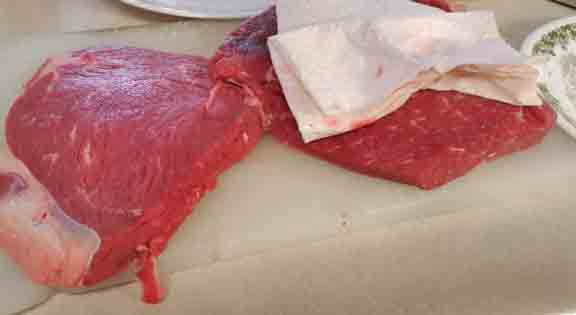
Wipe off the meat with a paper towel to dry. With a carving knife slice the roast side wise into half to make thinner like you were cutting a hot dog bun open.

Heat oil in a dutch oven.

Pour flour into a dish and mix with paprika. Turn beef in flour, shaking meat to remove excess flour. Brown meat on both sides, about 5 minutes per batch. Transfer beef to a plate. Do the second piece. Remove to cutting board.

Add onion, celery, and carrots to the dutch oven, reduce heat to medium, and cook until softened, about 5 minutes. Add garlic and cook for 1 minute.

Pour in ½ cup of broth. Stir up the fond from bottom of pot.


While that cooks, carve up the meat into cubes about 1 and a half inches in size.

Return beef to pot, pour in the 2 cups of broth and cover.

Bake in the preheated oven until beef is tender, 1½ to 2 hours. Season to taste with salt and pepper.

This hearty meal is just fine served in a big bowl. Some prefer to serve it over mashed potatoes or even rice as we did here. Your choice.


For our music: https://www.youtube.com/watch?v=FsvCIOZTfV0 Before The Parade Passes By

So happy to be serving my Master Indy:

socialslave


To satisfy and restore.

To nourish, support and maintain.

To gratify, spoil, comfort and please,

to nurture, assist, and sustain

..I cook!


Please buy slave's cookbook:


The Little Black Book of Indiscreet Recipes by Dan White 

 http://www.amazon.com/dp/B00F315Y4I/ref=cm_sw_r_tw_dp_vAT4sb0934RTM via @amazon

=================================

Denise D’Anne

Ms. D'Anne was born Anthony Albanese in New York City in 1933. Originally from Brooklyn, she spent most of her childhood on the East Side of Manhattan in an Italian immigrant community of modest means.

Her mother was a chef, who instilled in Ms. D'Anne a lifelong interest in fine food.

As “Anthony”, Ms. D'Anne served in the U.S. Army in Europe, and in the early 1950s settled in Los Angeles, where she worked for a railroad company and earned a degree in political science from Los Angeles City College.

Ms. D'Anne realigned her gender identity in 1968, and was an early pioneer in the transgender movement.

She arrived in San Francisco in 1970, and became a city employee in what would become the Department of Human Services. She was a member of Service Employees International Union Local 400, where she served as shop steward, editor of the Local 400 newspaper, and a member of the executive board. She helped write new bylaws that, at her insistence, included a clause banning discrimination based on sexual orientation.

Ms. D'Anne defended union interests on local and state ballot initiatives, and took a leadership role in the fight for pay equity. In addition to speaking in various forums, she contributed op-ed pieces defending the rights of workers, especially women and minorities.


She served as Milk club co-president in 2010 with David Waggoner. He remarked: "She was a powerhouse and a trailblazer and it was an honor to serve with her as a co-president of the Milk club. She is one of the last in a long line of trans and gender-nonconforming legends of San Francisco, from Vicki Marlane to José Sarria. I am grateful to have known her and to have witnessed her unreserved passion for justice for all."


Gabriel Haaland, a trans man and a former Milk club president, said

"She was a lifelong champion for the environment, labor, the LGBT community, renters, and so many social justice causes.

"She consistently pushed us all to do the right thing, and spent her entire life in service to the community,"

In 2019, the San Francisco Living Wage Coalition honored her as Labor Woman of the Year.

As an active member of the National Organization for Women for many years, Ms. D'Anne worked to pass the city ordinance establishing the Commission on the Status of Women. She also helped establish the Women's Building and the Women's Credit Union, and was an executive board member of the Democratic Women's Forum, her obituary noted.

An early activist for environmental issues, Ms. D'Anne is a former president of San Francisco Community Recyclers. For a while she had a local radio program on environmental issues, where she was known as the "Green Lady." She helped write the Sustainable Plan for the city of San Francisco.

In 2007, San Francisco Tomorrow honored her as an Unsung Hero for her role as a pioneer in the city's recycling program.

She was a delegate to the San Francisco Labor Council. She ran unsuccessfully for the San Francisco Board of Supervisors, citywide in 1998 and in District 6 in 2002.

Denise D'Anne, past in 2020. She was 86.

A cause of death was not given by Geoffrey Scott, who was an "adopted" grandson of Ms. D'Anne's. Ms. D'Anne died at her home in the city's Mission district, he said.

"I met her in 1995 and everyone would call her 'grandma' at the recycling center," Scott told the Bay Area Reporter in a phone interview September 3. "We informally adopted each other."

Unfortunately, Ms. D'Anne left behind no living relatives. In her final years Scott and his partner, David Scott, cared for her. She was well-loved in San Francisco, not just in the LGBTQ community but also among environmental and labor activists of all persuasions.

"She was really proud of who she was," Geoffrey Scott said.