Tuesday, April 23, 2019

Palatinus Potatoes and Beans


Well after a brief stay in the hospital, your friendly neighborhood slave is back with more culinary delights for you to prepare. This hearty potato and green beans makes a wonderful one dish meal! It is named to honor a LGBT Hero John Palatinus. A brave photographer in the 50's that forged the way for a community to be started and selling “beefcake” photos.


Fresh green beans, red potatoes, and onions jazz up a great potato Au Gratin. Be sure to read the short story after the recipe.


Ingredients

  • 2.5 lbs red potatoes
  • 1 onion
  • ¼ lbs loose sausage
  • 3 tablespoons butter
  • 3 tablespoons flour
  • 1 teaspoon dry mustard
  • 2 cups warmed milk
  • ¼ cup gouda or gruyere cheese
  • salt & pepper to taste

Instructions


Preheat oven to 400 degrees F. Coat an 8-in. square baking dish with cooking spray.
Heat the milk.
Rinse green beans and snap the ends off.


Cook the ¼ lbs loose sausage in a medium skillet as you prepare the potatoes and onions.


Wash potatoes and slice into 1/8' thin slices. Slice onion as thin as possible.


Layer potatoes and onions in little stacks. Place stacks in the casserole dish. Cover with plastic wrap.


Microwave on full power for about 10 minutes (be careful, it will be hot when removing the plastic wrap).


Meanwhile sprinkle the four into the sausage in the skillet and melt butter Stir and cook 1 minute. Add seasonings and warmed milk. 


Stir over medium heat until thick and bubbly. About 3 minutes remove from heat.
This by the way is now an excellent sausage gravy if you ever need some!
Spread the stacks out in the dish and add the green beans. Stir until mixed. 
 

Spoon the sauce over potatoes. I sprinkled the Gouda cheese as a light thin topping.

Cover with foil (sprayed with cooking spray) and bake 45 minutes. Remove foil and check to see if the potatoes are cooked and done. Uncover and bake an additional 15 minutes or until lightly browned.


Important to let this “rest” for 10 minutes before serving. This allows the sauce to be pulled back into the potatoes.

NOTES:
  • Yukon gold potatoes (or red potatoes) have tender skin and don’t require peeling (they hold their shape well).
  • Use a mandolin to make these slices
Serve as a one dish meal with perhaps some crusty bread.


So honored to serve this to my Master Indy
socialslave

To satisfy and restore.
To nourish, support and maintain.
To gratify, spoil, comfort and please,
to nurture, assist, and sustain
…..I cook!

Please buy slave's cookbook:

The Little Black Book of Indiscreet Recipes by Dan White 

==============================================================


John Palatinus
John Palatinus was noted for his male physique photography which appeared in numerous magazines that catered to the interests of a growing gay male population in the 1950's.

It might be hard to remember how things were before the widespread internet.
The Forties and Fifties were especially guided by society's push to erase any depiction or even mention of homosexuality. Gay did not exist. Young gay men and women had no where to turn to find others in some instances to even know others existed. Teens hid underwear advertisements to fuel their growing sexuality.

In this environment, photographer John Palatinus in northern Indiana, dared to showcase the male physique as a form of beauty and desire. His images frequently depicted men posing in straps or nude. They were published in “Tomorrow’s Man” and other bodybuilding magazines popular among gay men. They sort of defined the physical archetype, which later became iconically gay.


Artist and author Tom Bianchi said, the images had an validating effect on these lives.
“For kids like myself, who were isolated the photos were the only window into the possibility that there might be a world where gay people could be.”

Born on July 6, 1929, Palatinus grew up in Indiana. It was after his military service in 1954 that he began photographing male bodybuilders, who were usually friends who wanted to document their bodybuilding progress. Early on, he said he realized the images had a “certain amount of art in there.”

John Palatinus was one of the few leaders in the fight for the freedom to disseminate gay photography and art during the 1950's and 60's. He was a legendary photographer from an era now called the Golden Age of Physique Photography. At that time in America, it was illegal to send even semi-nude photographs through the U.S. Mail.

Physique photography was about appreciation of the male form. Palatinus began by photographing one bodybuilder and quickly word spread.
“There was a whole group, a small community of dedicated people who wanted to show their progress.”
Initially only for the models, the pictures began to be published in physique magazines of the time like Tomorrow’s Man, published across The United States. In homophobic McCarthyist America, these magazines were to serve a second purpose- tacitly uniting many closeted homosexual men, who began collecting the images from photographers using the details printed with the pictures.
Later on in the nineties and beyond, Vintage Male Physique (VMP) photography was to become a collector’s business.

Palatinus was gay but most of his models were not.
“People always ask me: ‘How many of your models did you have sex with?’ and whenever they ask me that I say: ‘none of them’. I don’t think you should violate that covenant as a photographer. If you’re gonna make love to them, you do it through the lens.”
In 1954 Palatinus moved to New York, and set up in Greenwich Village, taking male physique photographs and distributing them to eager collectors. In 1958 he began to photograph nudes.

“Before then everything was covered or we would do poses so that the genitalia were not showing. It was a little bit soft core because you could see the outline of the genitalia, but nothing was exposed. It was always of one person, there was no sex involved so I didn’t think it was salacious or readily erotic. I decided: ‘Well I have these beautiful people why don’t I photograph them nude?’ Again I didn’t photograph with erections, there wasn’t any sort of sexual side to them.”
That was left to the roaring imaginations of the viewers.

However, Palatinus’ work was being intercepted by the US postal service, leading to his arrest in 1959. “The police came in to my studio and they took everything, they did a clean sweep, my camera, my lighting equipment, negatives, money, everything. The negatives ended up in the police department. I never saw them again. This was a very difficult time in America, it was the end of the McCarthy era and gay bars were being closed and they would say ‘these premises have been closed because they have been frequented by undesirable people or homosexuals.’
“They would close the bar and they would put the names of the people at the bar in the newspaper, ruining their lives forever. It was a very repressive time. It is representative of the puritanical America of that period and there are still vestiges of that today.” 
 
Using his own name and daring to photograph men for the appreciation of other men, Palatinus was taking a high risk. Alan Harmon, a VMP collector and curator, says it was rare for photographers to identify themselves so openly. 
“A lot of people didn’t use their real name when taking these photographs, Unless you got into their inner circle of buyers, you never knew who was taking these pictures. Then you got the rebels like John who used their full, real name. He was pretty fearless.”

Palatinus was one of many Male Physique photographers who was persecuted for his practice. Bob Mizer, another photographer, was imprisoned in 1959, the same year that Muscle Beach, a prominent setting for physique photography was closed down. “I did not expect it to come crashing down the way it did. It meant starting over at life again because at that point I didn’t have a day job anymore, because I was doing so well with the photographs. After that happened I really had to start my life over again and go back to doing something I did before.” 
 
He was arrested and put on trial in 1961. Palatinus was found guilty but allowed to go free because he had spent a night in jail at the time of his arrest.
He was so shaken by the experience that he turned away from physique photography as a career and focused on styling various commercial shoots for his peers and other creative outlets. But half a century later, renewed interest in his photographs fueled an unexpected career resurgence.
Palatinus began showing his work again in 2009. It was greeted with enthusiasm from galleries and festivals. His photographs were featured in exhibitions from Los Angeles and San Francisco to Paris, France, and Berlin, as well as in numerous magazines.
A 2011 show at Savage Gallery in Palm Springs drew a huge turnout, as Palatinus was honored that year with the Stonewall Lifetime Achievement Award lifetime achievement award. 
 
“When I was in court in 1959, the judge said: ‘by today’s standards it is considered pornography but who knows? In 50 years’ time it may be considered art’ and that really is true.”

 
In September 2014 after a brief illness, John Palatinus passed. He was precede by his life partner of 48 years, Jack Alexander.


Monday, April 8, 2019

Merle Miller Corn Chowder


Here is another hearty home made soup to honor LGBT Hero Merle Miller. Shortly after the Stonewall event, fifty years ago, this famed writer set down just what it meant to be a “homosexual”. It was and is a masterpiece of LGBT culture. Read about him in short article after the recipe.


This soup is made of things right out of your pantry. You should not have much to pick up at the store for this. A thick, rich homemade chowder can be the perfect meal for a lunch or game night while we still can not count on the weather holding. 


Ingredients:
3 cups
Chicken broth low salt
2 cans
Corn Kernels, drained
1
Yellow Onion, finely diced
2 cloves
Garlic, minced
1 can
Diced Potatoes
1lbs
Fully cooked pork sausages
½ cups
Half-and-half non fat
¼ cup
Fresh Parsley, chopped
½ tsp
Dried Thyme
2 Tbsp
Butter
1 Tbsp
Olive Oil


Salt and pepper to taste


Directions:
Do your cutting: Chop the onion and mince the garlic.


Warm the olive oil and butter in a dutch oven over medium heat. Toss in the onions, and cook for 5 minutes to start. 


Add the sausages, cook them until brown on both sides, another 5-6 minutes.


Remove the meat. (While the chowder is cooking cut the sausages into bite sized pieces.)


Pour in the chicken broth and scrape the bottom to release any browned bits. Add the drained can of potatoes and bring to a boil. Reduce to simmer for 30 minutes until the potatoes start to break down.
Then toss in the drained corn kernels for another 15 minutes. 
 

Carefully, using an immersion blender, smooth out the chowder. Season with salt and pepper, and add in the parsley. 


Once it is the consistency you want, add the cut up sausages and the can of creamed corn. 


Let simmer for 20 minutes to blend flavors.
If you like, serve with a spoonful of sour cream in each bowl.


What a wonderful meal to serve my Master Indy
socialslave

To satisfy and restore.
To nourish, support and maintain.
To gratify, spoil, comfort and please,
to nurture, assist, and sustain
…..I cook!

Please buy slave's cookbook:

The Little Black Book of Indiscreet Recipes by Dan White http://www.amazon.com/dp/B00F315Y4I/ref=cm_sw_r_tw_dp_vAT4sb0934RTMvia @amazon


=========================

 
Merle Miller was born in Iowa at the end of World War I. Before World War II, he was a Washington correspondent for the late Philadelphia Record. During the war, Miller served both in the Pacific and in Europe as a war correspondent and editor for Yank, The Army Weekly.

During the course of a writing career that spanned several decades, Miller wrote numerous novels, including the best-selling classic post war novel, That Winter (1948). He also wrote several non-fiction books, many television plays, and was the author of the screenplays, "The Rains of Ranchiphur" (1955), and "Kings Go Forth", (1958). His postwar career as a television script writer and novelist was interrupted by the advent of Senator Joseph McCarthy and Miller's inclusion on the "Blacklist." He did not re-enter TV until the early 60s.

The trigger:
Joseph Epstein, in an essay in the September, 1970 issue of Harper’s, spouted the typical anti-homosexual drivel that was common at that time. He closed with: “If I had the power to do so,” he writes, “I would wish homosexuality off the face of the earth… nothing [my four sons] could ever do would make me sadder than if any of them were to become homosexual. For then I should know them condemned to a permanent niggerdom among men, their lives, whatever adjustment they might make to their condition, to be lived out as part of the pain of the earth.”

Merle Miller, who had been an editor at Harper’s, felt “outraged and saddened” to read Epstein’s language. He called Bob Kotlowitz, the magazine’s executive editor, to say as much. Kotlowitz, a friend of Miller’s, responded that he, like “a great many intelligent people … more or less” agreed with Epstein. 
 
A few days later, Miller had lunch with two editors at the New York Times Magazine, Gerry Walker and Victor Navasky, and Epstein came up again. Navasky, praised the unusual power of Epstein’s piece. Miller wouldn’t have it: “Epstein is saying genocide for queers!” In the essay, Epstein, had written that “Nobody says, or at least I have never heard anyone say, ‘Some of my best friends are homosexuals.’”
“Many of my best friends are Jewish fags, black fags…. Miller continued.In fact, most of my friends are gay! In fact, I’m gay! In fact, that’s the first time I’ve ever said that in public! And there are only three of us here.”

Navasky returned to his office and spoke with his superiors at the Times, They OK'ed and Miller was asked to express his reaction in a magazine piece. What Miller turned in, Navasky said, was “so beautiful, so spectacularly different, so compelling, that it had to run.”

“What It Means to Be a Homosexual”was published on January 17, 1971. It was extraordinary. Miller had not intended to write anything personal—“I have no taste for self-revelation,” he later wrote—but it seems to have spilled out from his pen, his typewriter, a reasoned and reasonably furious demand for respect.

“I am sick and tired,” he wrote, “of reading and hearing such goddamn demeaning, degrading bullshit about me and my friends.” It was a great deal more than that, but in a way, Miller’s anger was it: a simple, loyal appeal on behalf of himself and his bullied friends.

Miller couldn’t have known what would happen after the publication of his essay.
Miller’s essay got over two thousand letters—more than the paper had ever received for a single article. Later that year the piece was published as a book, with an afterword by Miller. Forty-one years later, Penguin Classics has re-released it as “On Being Different,” with a new foreword by Dan Savage and a new afterword by Charles Kaiser, the journalist and author of “The Gay Metropolis.”


Miller stated:
“I'll tell you this, though. It's not true, that saying about sticks and stones; it's words that break your bones.”
“I have never infected anybody, and it's too late for the head people to do anything about me now. Gay is good. Gay is proud. Well, yes, I suppose. If I had been given a choice (but who is?), I would prefer to have been straight. But then, would I rather not have been me? Oh, I think not, not this morning anyway.”
“A young homosexual friend recently said, "It's no secret that you, that one, has such-and-such color hair, is yea high, weighs thus and so, and so on, but when you keep one part of yourself secret, that becomes the most important part of you."
And that is true, I think; it may be the most important truth of all.”

Miller was fed up, and, in Dan Savage’s words, “captured the anger that has motivated L.G.B.T. activists from the Mattachine Society to the Stonewall riots to ACT UP to the It Gets Better Project. What are L.G.B.T.-rights activists but people who grew sick and tired of reading and hearing such goddamn demeaning, degrading bullshit about themselves and their friends and decided to speak up and fight back. ”

As Miller wrote in his May, 1971 afterword, doctors and therapists who came out would lose their patients; “lawyers wrote that they would lose their practices; writers would lose their readers; a producer would not be able to raise the money for his next musical.”
That afterword closed with a sigh of relief: “I realize how stifling the air has been all these years. I may not be freer, but I’m a lot more comfortable, a lot less cramped.” 

 
It was, of course, a landmark piece, and its author became an activist after it ran. Unfortunately, when Miller died in 1986, his New York Times obituary said that he had no survivors, although for years he had been with his partner, the writer David W. Elliott.


Sunday, March 31, 2019

Carl Wittman Garden Pot Pie


This easy meal features a wonderful array of vegetables with a flaky crust that turns a golden color for your table. It is named for an LGBT hero, leader and writer. Learn more about him in a short article after the recipe.


Raid the pantry and freezer for this comfort food. Not expensive and healthy to boot! Great for an emergency when you don't want another trip the store.


Ingredients

  • 1 tube crescent rolls
  • 1 (10.75-oz.) condensed cream of bacon soup (or mushroom)
  • 1 (16-oz.) bag frozen mixed vegetables thawed
  • ½ cup mushrooms, rinsed and dried
  • ½ C. fat free milk
  • ½ tsp. dried thyme
  • ½ tsp. pepper
  • 1 egg, lightly beaten

Directions

Preheat oven to 375 degrees.
Spray a 9 x 9 casserole dish. Rinse and cut the mushrooms.


In a large bowl mix the vegetables and mushrooms.


In a medium bowl, combine soup, milk, thyme, and pepper. 


Stir this into the vegetable mix until well incorporated. Spoon filling into casserole dish.


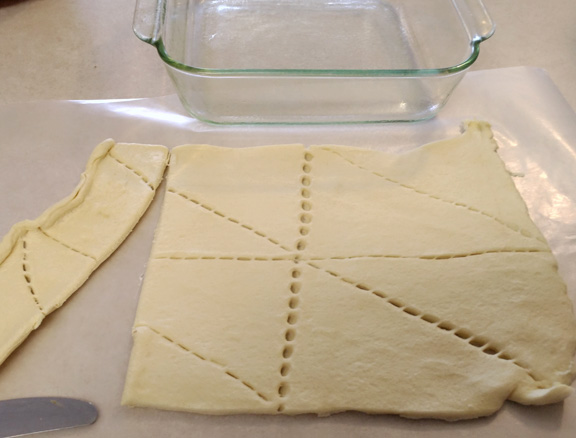
On a piece of wax paper unroll the crescent dough. Trim with a table knife to fit the same size as the dish. 


Carefully invert over the casserole dish.
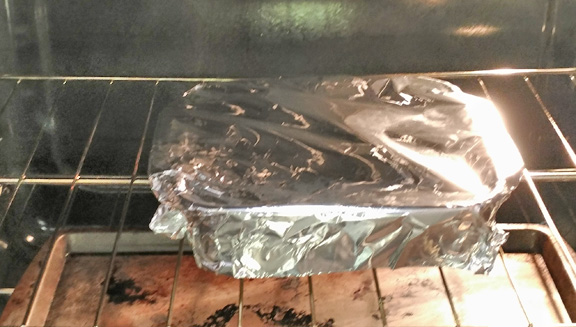
Brush with beaten egg. Cover with foil. 


Bake for 20 minutes. Remove foil and then bake for 15 - 17 more minutes. You want the crust well golden brown. 


BTW: those strips you trimmed off can go in the oven on a piece of foil and cook right along.


What a wonderful aroma fills the kitchen! So happy to be serving this to my Master Indy.


For our music: https://www.youtube.com/watch?v=ubjBU62aWbo
socialslave

To satisfy and restore.
To nourish, support and maintain.
To gratify, spoil, comfort and please,
to nurture, assist, and sustain
…..I cook!

Please buy slave's cookbook:

The Little Black Book of Indiscreet Recipes by Dan White http://www.amazon.com/dp/B00F315Y4I/ref=cm_sw_r_tw_dp_vAT4sb0934RTMvia @amazon

----------------------------------------------
Carl Wittman


 Carl Wittman was 17 when he entered Swarthmore College in 1960. He became a student activist. Wittman spent summers doing civil rights work in the South, and joined the national council of Students for a Democratic Society (SDS). 
 
The blond-haired son of communist parents was jailed while participating in anti-segregation sit-ins at the Dorset Theater in Cambridge on Maryland's Eastern Shore in 1963.

He quickly became disillusioned about the anti-gay bigotry in the '60s radical “New Left.” Former SDS national secretary, bisexual Greg Calvert recalled, “I was defamed and discredited by my opponents . . . including a vicious and disgusting gay-baiting campaign . . . People talk about sexism—they should talk about homophobia in the movement.”

Wittman, while self-identified as gay since the age of 14, remained closeted until coming out in the article, "Waves of Resistance," published in the November, 1968 issue of the antiwar magazine, Liberation.


Then just a few months short of the Stonewall event, Wittman wrote Refugees from Amerika: A Gay Manifesto.
It is considered one of the most influential gay liberation writings of the 1970s.
The article became a guide to gay activism and gay life, and was used in particular by the Gay Liberation Front. The manifesto was re-printed in Joseph A. McCaffrey, (1972), "The Homosexual Dialectic":

“Like refugees,” he writes, we homosexuals have fled “blackmailing cops” who beat us, families who “disowned or 'tolerated' us,” and “small towns where to be ourselves would endanger our jobs and any hope of a decent life.” The time is now to “free ourselves.” “We are children of straight society,” but we must “stop mimicking straights.” Rather than “oppressive” “traditional marriage,” for example, he urges us to “define for ourselves a new pluralistic, rolefree social structure . . . instead of measuring our relationship in comparison to straight ones, with straight values.”
On coalition building he contends, “But we know we are radical in that we know the system that we're under now is a direct source of oppression, and it's not a question of getting our share of the pie. The pie is rotten.”
“We've been playing an act for a long time, so we're consummate actors” he concludes, “Now we can begin to be, and it'll be a good show!”


While living in the West, Wittman became involved in RFD, a "magazine for rural gays," first published in 1974. About the journal, Don Engstrom, one of the men who began the publication, stated that "original RFD'ers thought it was really important to build culture," it was "never about isolationism." Carl, he remarked, "was the first of us to start talking about how politics was truly about creating culture versus subverting culture."

In the early 1980s, Wittman continued his social activism and moved to the southeast. In North Carolina he co-founded the Durham Lesbian and Gay Health Project. Recognizing that people must be "confident that they have some control over the decisions which affect their lives.” 
 
Instrumental figure in country dance
Carl Wittman, led the development of"gender-free" dance in which there were no gendered dance roles"
He started a local community dance in his barn in Golden, Oregon, where he pulled in people from several intentional communities, as well as families and friends from around the area. His dancing community ended up being a mixture of gay men, lesbians and friends. 
 
Carl taught English and Scottish country dancing. He allowed anyone to dance with whomever they wished and in any role they chose. Not satisified with this, Carl changed his role identification system to "Reds" and "Greens" (Reds identifying the traditional gent's position and Greens to identify the lady's position). He went on to further develop this to a method defined as "Left File" and "Right File" dancers (the left file identifying the traditional gent's role and the right file identifying the traditional ladies position). 

 
Carl traveled around Oregon, starting other dance communities, and teaching this style of English and Scottish Country Dancing. Carl developed another tradition during this time, that being of how to line up for each dance. He advocated that everyone come to the set individually and fill in the next available space. This method ensures that everyone will have someone to dance with and addressed the sometimes-awkward practice of asking someone to dance, particularly with folks new to the dance.
In his manual on that dance style, he stated: “We will dance as an ever changing stream of faces, and groups will come together as a community rather than breaking up into cliques. No wall-flowers, no most-populars, no competition.” “And it worked,” a friend remembered about it, “mixing up dykes and fags, hets and straights, men and women in constantly shifting patterns, and it didn't really matter who was what.” 
 
As Carl did “final work on the dance book” and said “the most essential goodbyes,” he recalled that same friend in a poignant newsletter article of farewell. 

Carl Wittman had suffered from AIDS complications. When it became too painful in 1986 he called his friends together at his home and orchestrated his own death.


Friday, March 29, 2019

Efland Philly Steak Casserole

As we approach the 50th anniversary of the Stonewall Uprising, we'll be looking back on some of the events leading up to that event. We dedicate this dish to a nearly forgotten victim in our fight for equality, Howard Efland. Be sure to read the quick article following the recipe.
The wonderful tastes of a Phlly Cheese Steak sandwich makes this casserole a winner on any night. By using low fat cheese, you drop the calories. By using tough stew meat, you drop the cost. We know how to make stew meat tender, just cook it low and slow.

Ingredients

8 oz uncooked large elbow macaroni (about 2 cups)
1 lbs stew meat
2 cups thinly sliced yellow onions
½ cup sliced mushrooms
1 medium green bell pepper, cut in thin strips
1 tablespoon Worcestershire sauce
1 package (8 oz) 1/3-less-fat cream cheese (Neufchâtel), cubed
½ cup beef flavored broth, no salt added
¼ lbs provolone cheese slices

Directions:

Heat oven to 225°F. Spray 13x9-inch (3-quart) baking dish with cooking spray.
Carefully slice up 2 med onions with a slicer. Toss 1Tbs oil & onions with stew meat into the dish and season with salt & pepper.


Cut up the green pepper into thin short strips and mix in. Stir in 2 Tbs oil until all is blended in.


Slow roast this in the 225 degree oven for two hours!

Cook the macaroni.
Cut up the softened cream cheese into dice shapes. When pasta is “al dente” drain and stir in the cream cheese to melt. Add the Worcestershire sauce and beef broth, stir well.

With 15 minutes to go on the meat, toss in the mushrooms and stir through.


Carefully take the meat dish out of oven. Turn the oven to broil.

Stir the macaroni into the meat mixture until well mixed. Then top with a layer of provolone slices.


Slide back in under the broiler until cheese is melted and showing touches of brown.


Serve with a crusty bread!

Nutrition Facts
Serving Size: 1 Serving 1/8 casserole
Calories 390 Calories from Fat 160 Total Fat 18g Saturated Fat 9g Trans Fat ½g Cholesterol 80mg Sodium 730mg


What an honor to be serving my Master Indy

socialslave

To satisfy and restore.
To nourish, support and maintain.
To gratify, spoil, comfort and please,
to nurture, assist, and sustain
…..I cook!

Please buy slave's cookbook:

The Little Black Book of Indiscreet Recipes by Dan White 


=============================================== Howard Efland


Just 4 months before the Stonewall Event in New York City.


The Dover Hotel was a five-story brick building in downtown Los Angeles. The hotel operated as a bathhouse.  Gay men checked in, removed their clothing, and laid on their beds with the doors ajar waiting for others to walk by in the hopes of meeting someone.


Writer Dan Savage describes a bathhouse as a whore house run by volunteers.


The Dover hotel not surprisingly, was the scene of a number of raids by the LAPD’s Vice Squad and was known to them as an easy bust for “faggots”.


On March 9th, 1969, just 4 months shy of the Stonewall riots in NYC, Howard Efland, a male nurse who checked into the hotel under the pseudonym of J. McCann.


Then all hell broke lose!
LA vice officers Lemuel Chauncey and Richard Halligan claimed that Efland groped them so they arrested him, dragged him naked, bleeding and screaming down a flight of stairs by his feet and into the street.

In front of several witnesses the two police officers who were well over 6’2 inches started beating the slightly built, unarmed and and non-resisting gay man to death while he screamed “Help me! My God, someone help me!” The two police officers kicked him repeatedly, did knee drops onto his stomach, and savagely beat him.


While several witnesses claimed that Howard Efland died at the scene. Chauncy and Halligan stated that Elfland was alive as they “threw” the body into the back of the police wagon.

The Admissions Officer who was on duty at County General Hospital testified at the Coroner’s inquest that when they received Efland, they tied him down to the bed and he was in bad shape. The Nurse testified that she went into the other room with the cop because the guy had bitten his finger. Forty minutes later while she’s still working on the cop another nurse came and said ‘hey, the guy in the other room died.’


The LAPD later claimed that Efland had momentarily escaped from a police van as it was speeding down the freeway after his arrest — and that his putative fall from the van had caused the fatal injuries.


The District Attorney refused to bring charges, and the City of Los Angeles rejected calls to discipline the officers.


The L.A.P.D. first informed Efland’s parents that their son had died of a heart attack. Later the L.A. County Coroner ruled Elfland’s death an “excusable homicide” and the story was withheld from the mainstream media. However the gay newspaper, the Advocate, picked up the story and responded strongly by calling the L.A.P.D. “psychotics” 


Activist Morris Kight recalled, "We were horrified and we did the first real organized protest about that in that we asked that a coroner's jury of civilians was put together and they had two days of testimony of police brutality (us mostly), with the police saying he was a dirty faggot and so on.
The homicide was called justified.
We didn't think it was justifiable." The Rev. Troy Perry, founder of the Metropolitan Community Church.


The  Rev. Perry, would lead 120 marchers in a rally to the the site of Dover to commemorate Efland’s fatal beating and murder.


The five-story brick building that housed the Dover Hotel no longer exists. In its place today stands a parking structure with a street-level retail space that is currently vacant.


The incident has been memorialized by the Back2Stonewall website.


No one was ever held accountable for the murder of Howard Efland.
After publishing his story in 2014 the nephew of  Howard Eflland contacted Back2Stonewall.com  Being  very young when it happened he was never told the true nature of his Uncle’s death.


On March 2, 2016, Back2Stonewall’s Will Kohler talked with LAPD’s  Gay, Bisexual & Transgender Community Liaison in the Community Relations Department who promised to look into the Efland case after 46 years.


There has never been an official response. Let us remember Howard Efland who was beaten to death for being gay.