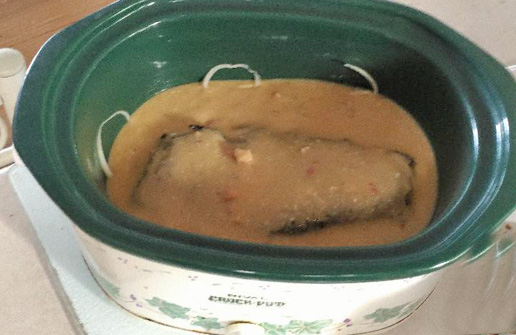
For
this breakfast pie we travel halfway around the world. Bacon and egg
pies are a New Zealand classic. They make a perfect holiday
breakfast. Fancy looking and easy to assemble. Read about our hero
for some great dinner conversation.

Eggs,
thick smoky chunks of juicy bacon, lightly spiced flavorful soft
green shallots, and gooey cheese all encased in beautiful, buttery,
flaky layers of puff pastry. What is not to love? Practice this
elegant bake and be ready for the holidays.
Ingredients:
Shallot Mixture
▢ 1
tbsp butter
▢ 1
cup of sliced shallots
▢ ¼
tsp garlic powder
▢ Pinch
of salt
▢ 1
TBS Worcestershire sauce
Bacon and Egg Pie
▢ 1
½ lbs puff pastry or 3 store-bought pastry sheets, thawed
▢ Extra
puff pastry sheet for decorations optional
▢ 12
oz smoked bacon thick cut, cut into ½ inch strips
▢ 9
eggs 1
yolk is reserved for the egg wash
▢ 3
oz Monterey Jack cheese shredded or Gouda
▢ Extra
salt and pepper to taste

In
a saucepan, melt the butter over medium-high heat. Add the garlic,
shallots, pinch of salt and cook until they have softened, while
stirring frequently. Once softened, stir in the Worcestershire sauce.
Allow the mixture to cool down sightly.

Place
a pizza stone in the middle rack of your oven, and preheat oven to
400°F.
Spray
a 9 inch pie pan. Since my store was out of puff pastry I used a
regular pie crust with a unrolled crescent dough for the top crust.

Place
about ⅓ of the bacon on the bottom of the sheet.

Break
2 eggs into a bowl. Separate the next egg adding the white and
reserving the yolk. Whip together. Spread the eggs over the bacon on
the base of the pie dish.
Break
the remaining 6 eggs one at a time in a small bowl and slide them
into the pie, try to keep them evenly spaced through the dish.

By
breaking eggs into a bowl you can fish out any bits of shell that
might drop.
Believe
me it is a mess if the final egg decides to have its shell crumble
into the other eggs in the pie shell!
Sprinkle
some salt and pepper on top.
Dollop
½ of the shallot mixture over the eggs, followed by the rest of the
bacon, then the rest of the shallots and finally the grated cheese.
Sprinkle a little salt and pepper over the cheese.

Brush
some water around the edge of the pie, and place the top pastry to
cover the casserole dish. Press the edges gently to seal. With your
fingers, roll the excess to create a ridge along the edge of the pie,
and crimp it using a fork to completely
seal the
edges of the pie.
Mix
the extra egg yolk with about 1 tbsp of water and whisk to combine.
Brush this egg yolk over the surface of the pie.
Make
5 slits in the pie carefully (to avoid piercing one of the eggs).
Place
the pie in the preheated oven, on top of the preheated pizza stone.
Lower the heat to 375°F,
and cook for about 50
minutes.
Check
the pie after
20 minutes,
rotate the pie if necessary and check every 10
minutes afterwards.
If the top looks like it's going to burn, cover with foil.

When
the pie is baked, remove it from the oven and let it cool down.
Slice
and serve while warm, but not hot, or at room temperature.
Serve
with ketchup for a truly New Zealand touch.
Notes:
Make
sure to get some good
quality thick bacon.

Some
recipes call for scrambled eggs, here we added both whole eggs and
scrambled eggs. So out of the 8 eggs used for this recipe, 6 were
whole, and the yolks of the remaining two were broken. The scrambled
eggs spread through the pie and the other whole eggs were evenly
placed throughout the pie.
Just
a sprinkling of cheese adds more flavor. I used Monterey Jack which
melts well and has a milder taste than cheddar. If you can’t find
Monterey Jack, use a gouda instead. The cheese adds a delightful
creaminess to the pie without making it too soggy.

For
our music: https://www.youtube.com/watch?v=EDnaW_JimyY
December, 1963
So
happy to be serving my Master for over ten years now.
socialslave
To
satisfy and restore.
To
nourish, support and maintain.
To
gratify, spoil, comfort and please,
to
nurture, assist, and sustain
…..I
cook!
Please
buy slave's cookbook:
The
Little Black Book of Indiscreet Recipes by Dan White
http://www.amazon.com/dp/B00F315Y4I/ref=cm_sw_r_tw_dp_vAT4sb0934RTM
via @amazon

======================================

Charles Arthur Allen Aberhart
died in a public park, Christchurch, New Zealand on January 23, 1964.
He was a drapery store manager. A few months earlier, he had been
convicted of indecent assault on a male, but because the offense was
with a man who had consented, he was sentenced to only three months
imprisonment. On the evening of Thursday the 23rd, he drove alone to
the Armagh Street entrance where he visited the lavatory by Little
Victoria Lake.

Allen didn’t know that
there had been recent queer-bashings in Hagley Park. Some gay men
sitting in their cars outside the park saw him go in, but nobody
thought to warn him because they didn’t know him.
That evening, six youths – Zane McDonald, 15;
Anthony O’Connor, 15; Frank Reynolds, 16; Raymond Neither, 16 or
17; Brian Johns, 17; and Roger Williams, 17 – decided to go to
Hagley Park “to belt up a queer”,
using Reynolds, who looked the youngest, as bait.
Aberhart was the second or third man Reynolds and
O’Connor approached in the lavatory. He talked to them about sex
acts. (A detective would later refer to “these disgusting phrases”
rather than quote them.) They took him to the others, who demanded
his name and began to gang up on him.
Allen
called out to William Overfield, out walking his dogs, “Call the
police, I’m being molested!” But Overfield thought Aberhart could
look after himself, and told them all to go home. Aberhart tried to
mollify them by offering to buy them a cup of coffee, or some fish
and chips, but they dragged him back into the
park.
John Cruthers, cycling through the park later, found
Aberhart’s body half way between the gates and the lavatory block.
He happened to know the six and had seen Williams’s car there
earlier. They were arrested the next day, and pleaded not guilty to
separate charges of manslaughter in the Supreme Court on May 5.
Five of the accused made statements to the police.
Four said Ray Neither had punched Aberhart, three said Zane McDonald
had, but each statement could be used only against the person who had
made it.
A detective testified that Neither had said he had
knocked Aberhart down, “and he did not get up again. He struck me
as a queer. Someone else hit him when he was on his knees, and then I
hit him again. You don’t know your own strength until you come
against a joker who doesn’t hit back.”
But police did not have Neither make a written
statement.
Aberhart
had bruised arms and a broken nose, consistent with being held while
he was punched, and a minor fracture of the base of the skull. The
coroner ruled his death was from a brain hemorrhage.
The trial lasted five days. None of the six defense
counsel called any evidence, but each spoke to exonerate his own
client. Gerald Lascelles, for Neither, said: “It is quite
impossible to put the brand of manslaughter on any individual. Of
none of the accused can it be said that he actually committed the
offense.”

It is believed as a
convicted gay man, he was treated with less humanity, and the jury
was more concerned for the boys' futures.
The jury had a lot more
sympathy for the idea that the youths were just “getting into a bit
of mischief”. The fact that a man had lost his life seemed to have
been forgotten.
So far as is recorded, the only acknowledgment of
homophobia in the verdict was a single line each from the prosecutor
and the judge.
The prosecutor said: “Whatever the unfortunate
man’s shortcomings were, he did not seek out his assailants: they
sought him.” (If he had sought them out, presumably he would he
have deserved all he got.)
The judge said: “The man who died might have had
homosexual tendencies, but he had a right to live.” (As though
queers deserved to be beaten up, in moderation.)
After deliberating seven hours, the all-male jury
found all six not guilty of manslaughter. They
had not even been charged with murder!
The Christchurch Press immediately responded:
“It is hard to understand how the jury decided that
none of the six youths was guilty. We can only hope that they were
not influenced by the reputed character of the dead man.”
Only Monty Holcroft in the Listener
even
mentioned the aspect of homophobia:
“At the center of the case…was the assumption
that the dead man was a homosexual…. The six youths who went in
search of “queers” were not moved by moral indignation: they were
looking for excitement, and believed their victim to be fair game….
The verdict…leaves…a suspicion that…an alleged homosexuality
has been felt to be an offense which mitigates a crime. And the crime
itself came out of an unhealthy concern with sexual deviation.”
It was one of those events that set the political
action in motion, and probably the first time that the public had
reacted in this way.
Letters to newspapers agreed, and the president of
the Howard League for Penal Reform, Arthur O’Halloran, wrote:
“Perhaps in the not distant future our archaic legislation relating
to homosexuality will be brought into line with the recommendations
of the Wolfenden committee.”
The “not distant future” was to stretch out for
years. Today, 57 years after Charles
Aberhart’s lonely death, there are still quarters where there would
be more sympathy for Johns, McDonald, Neither, O’Connor, Reynolds
and Williams than there would be for him. The homophobia that drove
them still simmers.

Homosexuality and same-sex
relationships have been documented in New Zealand for centuries.
Same-sex relationships and activities appear to have been acceptable
among pre-colonial Māori. Some stories, for example that of
Tutanekai and Tiki, center on same-sex couples.
Some of the earliest
European settlers in New Zealand were Christian missionaries who came
in the early nineteenth century and eventually converted most of the
Māori population to Christianity. They brought with them the
Christian doctrine that homosexuality was sinful. In fact, one
missionary, William Yate, was sent back to England in disgrace after
being caught engaging in sex with young Māori men.

When
New Zealand became a British colony in 1840, British law was adopted
in its entirety, making "buggery" illegal and a capital
offense. In 1893, all kinds of sexual
activity between men was criminalized, with penalties including
imprisonment, hard labor, and flogging. Sexual acts between women
were never criminalized.
A man whose death sparked
progress for the New Zealand gay rights movement has had his
conviction for homosexuality overturned.
Now the family of Charles Arthur Allan Aberhart,
known as Allan, has planned a memorial in his name to recognize how
far the movement has come.
"(We're) inviting
people to reflect on the fact that we've actually come really far but
it was at the expense of this poor man's life," Aberhart's
cousin, gay activist and public relations consultant Nicole
Skews-Poole said.
Outrage at Aberhart's
killing saw the launch of the Dorian Society,
the forerunner to the group that successfully lobbied for the
homosexual law reform.
"For (generations)
his death was a massive shadow over their lives and something that
really defined their activism," Skews-Poole said.
"(We're) trying to
also frame it as, it shouldn't have had to happen, but its happening
is part of what helped the homosexual law reform pass,"
Skews-Poole said.