Thursday, February 14, 2019

Sylvester's Bean And Bacon Stew

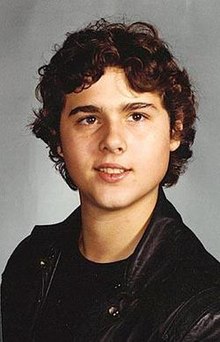
Tonight's meal is to honor a black LGBT hero and performer known as Sylvester. He was called the Queen of Disco. Read more about him after the recipe.

Here is a basic hearty meal that does not cost much. The type of meal that sustained many a young performer trying hard for their big break. Caned White beans, some bacon, a little onion and carrots makes a filling and heart warming meal. 
 

Ingredients:
12 oz. bacon, chopped into small pieces
1Tbs olive oil
1Tbs butter
1 yellow onion, diced
2 carrots, diced
2 celery stalks, diced
2 tsp Italian seasoning
Pinch or two sea salt + ½ tsp pepper
6 (15 oz.) cans small white beans or navy beans, drained and rinsed
4 cups Swanson chicken stock, hot
2 Tbs flat-leaf parsley, chopped optional


Instructions:

 
Chop up the vegetables. Here slave tried a batch of already chopped vegetables from the produce section. Cut up the bacon into tiny pieces.


Cook the bacon in a Dutch oven, in a drizzle of olive oil, then remove with a slotted spoon, drain on a paper towel, and set aside. Reserve 1 tablespoon of the bacon fat.


In a sauce pan heat up the chicken stock.

Add olive oil and butter into the pot along with the bacon fat, allow them to melt together.


Add in the diced onion, carrots and celery, and allow them to soften and saute for about 5 minutes. Scrape the bottom of the pot as you stir. This uses the bits that would otherwise be lost and can take a chisel to get out of the pot latter.


Add in about 2/3 of the reserved, crisped bacon, as well as the Italian seasoning, the sea salt and the pepper, along with the white beans, and stir to combine.


Pour in the hot chicken stock, stir, and allow the stew to gently simmer for about 45-50 minutes, partially covered.
Now mash the beans a little bit with the back of your spoon, to break them up and release their natural starch to thicken the stew.
After another half hour, turn the heat off and finish the stew by adding the rest of the bacon as a garnish.
Serve with a bread to soak up every tasty drop!


So happy to be serving my Master Indy on this Valentine's Day!

socialslave

To satisfy and restore.
To nourish, support and maintain.
To gratify, spoil, comfort and please,
to nurture, assist, and sustain
…..I cook!

Please buy slave's cookbook:

The Little Black Book of Indiscreet Recipes by Dan White http://www.amazon.com/dp/B00F315Y4I/ref=cm_sw_r_tw_dp_vAT4sb0934RTMvia @amazon


========================
Sylvester

Sylvester James Jr. (September 6, 1947 – December 16, 1988), who used the stage name of Sylvester, was an American singer-songwriter. Primarily singing disco, rhythm & blues, and soul, he was known for his flamboyant and androgynous appearance, falsetto singing voice, and hit disco singles in the late 1970s and 1980s. Sylvester was responsible for a string of hit singles in the late 1970s and became known in the United States under the moniker of the “Queen of Disco.”

Born in Watts, Los Angeles, to a middle-class African-American family, Sylvester developed a love of singing through the gospel choir of his Pentecostal church. Forced to leave both his church and his family after arguments and disapproval of his homosexuality,

Now homeless in 1962, Sylvester spent much of the next decade staying with friends and relatives, in particular, his grandmother Julia, who expressed no disapproval of his homosexuality, having been a friend of a number of gay men in the 1930s. At age 15, he began frequenting local gay clubs and built up a group of friends from the local gay black community, eventually forming themselves into a group which they called the Disquotays. Sylvester's best friend among the Disquotays was a trans woman named Duchess, who earned her money as a prostitute, a job that Sylvester refused to engage in. The group held lavish house parties, sometimes without permission at the home of their friend, rhythm and blues singer Etta James, in which they dressed up in female clothing and wigs, constantly trying to outdo one another in appearance.

Sylvester's boyfriend during the latter part of the 1960s was a young man named Lonnie Prince; well-built and attractive, many of Sylvester's friends described the pair as being "the It couple". Sylvester often hitchhiked around town while in female dress; such activity carried a risk of arrest and prosecution, for cross-dressing was then illegal in California. Although avoiding imprisonment for this crime, he was arrested for shoplifting on several occasions. He found work in a variety of different professions. In the 1960s, the Civil Rights Movement was at its peak, but Sylvester and his friends did not take an active role within it.

Although he had little interest in formal education and rarely attended classes, Sylvester was enrolled at Jordan High School. He graduated in 1969 at the age of 21; in his graduation photograph, he appeared in drag wearing a blue chiffon prom dress and beehive hairstyle. By the end of the decade, the Disquotays had begun to drift apart. Sylvester always considered himself male and began to tone down the feminine nature of his clothing, aiming for a more androgynous look which combined male and female styles and which was influenced by the fashions of the hippie movement.

Moving to San Francisco in 1970 at the age of 22, Sylvester embraced the counterculture and joined the avant-garde drag troupe The Cockettes, producing solo segments of their shows which were heavily influenced by female blues and jazz singers like Billie Holiday and Josephine Baker. During the Cockettes' critically panned tour of New York City, Sylvester left them to pursue his career elsewhere. He released two commercially unsuccessful albums as Sylvester and his Hot Band on Blue Thumb Records in 1973 before disbanding.

Focusing on a solo career, Sylvester signed a recording contract with Harvey Fuqua of Fantasy Records. His first solo album, Sylvester (1977), was a moderate success.
Sylvester's fame increased following the release of his solo album, and he was employed to perform regularly at The Elephant Walk gay bar in the Castro, an area of San Francisco known as a gay village. He became a friend of Harvey Milk—known locally as the "Mayor of Castro Street"—who was the first openly gay man to be elected to public office in California, and performed at Milk's birthday party that year. In the spring of 1978, Sylvester successfully auditioned for a cameo appearance in the film The Rose starring gay icon Bette Midler. In the film, he plays one of the drag queens singing along to Bob Seger's "Fire Down Below," in a single scene that was filmed in a run-down bar in downtown Los Angeles This was followed with the acclaimed disco album Step II (1978), which spawned the singles "You Make Me Feel (Mighty Real)" and "Dance (Disco Heat)", both of which were hits in the U.S. and Europe. 
 

During the late 1970s, Sylvester gained the moniker of the "Queen of Disco" and during his life he attained particular recognition in San Francisco, where he was awarded the key to the city.

He then signed to Megatone Records, the dance-oriented company founded by friend and collaborator Patrick Cowley, where he recorded four more albums, including the Cowley penned hit Hi-NRG track "Do Ya Wanna Funk."

An activist who campaigned against the spread of HIV/AIDS, Sylvester died from complications arising from the virus in 1988, leaving all future royalties from his work to San Francisco-based HIV/AIDS charities.
In 2005, he was posthumously inducted into the Dance Music Hall of Fame, while his life has been recorded in a biography and made the subject of both a documentary and a musical.

Shortly before his death Sylvester had bequeathed his future royalties of his music to local AIDS groups, but Sylvester died deeply in debt there was no money to distribute until the late 1990’s. Once his advances were repaid, his early-career label Fantasy Records then kept the money in an account until its proper recipient could be legally determined.

In 2010 The AIDS Emergency Fund and Project Open Hand split a check from Sylvester’s estate totaling nearly $140,000.


Tuesday, February 12, 2019

David's Deviled Pork Chops

Tonight's dinner is to honor David Reimer, a troubled young man who's life was destroyed by professionals offering to “help” him. Read about this fascinating story and learn what can often happen to people born with the “intersex” variation.


Here we slow-roast chops in a low oven. Insuring a soft juicy texture. We “devil” them by painting the tops and sides of the chops with a balanced paste of mustards, minced garlic, and black peppers. We coated the tops of the chops with crispy panko bread crumbs, toasted to make them water-resistant so that they didn't absorb moisture from the coating and turn soggy.


Ingredients:

2 Tbs butter
½ cup panko bread crumbs
salt & pepper
¼ cup honey mustard
1.5 tsp dry mustard
1 Tbs brown sugar
½ tsp garlic powder
4 boneless pork chops cut 1 inch thick*
Here I bought a sirloin tip pork roast and cut the chops yourself!

Directions:


If you bought a roast, slice it thick between 1.5 and 2 inches each piece for fantastic medallions. 


Marinade the pork for at least 3 hours. Use a simple 3 Tbs salt and 3 Tbs maple syrup in a bath just deep enough to cover chops.
 
When you are ready to cook, rinse off the pork and pat dry with paper towels.
Adjust oven rack to middle position and heat oven to 275 degrees.


Spray a nonstick skillet and heat over medium heat. Add panko and cook, stirring frequently, until golden brown, 3 to 5 minutes. You don't want it soggy, this will keep the crumbs from absorbing moisture out of the chops as they cook. Transfer to bowl and sprinkle with ⅛ teaspoon salt.

In a second bowl: Stir mustard, brown sugar, dry mustard, garlic, 1 tsp salt, and 1 tsp pepper until smooth.


Set wire rack in rimmed baking sheet and spray with vegetable oil spray. Pat chops dry with paper towels. Transfer chops to prepared wire rack, spacing them 1 inch apart.


Apply Side and Top Coats

Brush 1 TBS mustard mixture over top and sides of each chop (leave bottoms uncoated).
Spoon 2 TBS toasted panko evenly over top of each piece and press lightly to adhere.
Be careful about applying these coats. It is important that the mustard mixture is on just the tops and sides so you can avoid getting the paste on the rack while still imparting the maximum flavor. Crumbs Go Just on Top!
The paste will glue the panko crumbs to the chops' top surfaces; there's no need to press them onto the sides.


Roast until meat registers 140 degrees, 40 to 50 minutes.
Remove from oven and let rest on rack for 10 minutes before serving. This rest time gives you the chance to microwave the green vegetables. Always let meat rest while you cook the greens.


Serve with a starch and a green vegetable.


So honored to be serving my Master Indy

socialslave

To satisfy and restore.
To nourish, support and maintain.
To gratify, spoil, comfort and please,
to nurture, assist, and sustain
…..I cook!

Please buy slave's cookbook:

The Little Black Book of Indiscreet Recipes by Dan White http://www.amazon.com/dp/B00F315Y4I/ref=cm_sw_r_tw_dp_vAT4sb0934RTMvia @amazon


------------------------------
David Reimer The John/Joan Case


Bruce Reimer born as the slightly older of identical twin boys in August of 1965 in Canada. His twin brother was named Brian.
The tragic story of his life gives example to what happens when the doctors play God. This happens so often to people born with a condition known now as “Intersex”.
This is one of the topics that many believe “We don't talk about”. This means the general public has no idea what it is or how often it occurs, or how brutal it can be to the child.

So lets allow this story to enlighten us on the topic. Intersex people are born with sex characteristics (genitals, gonads and or chromosome patterns) that do not fit typical binary notions of male or female bodies.

Some medical articles indicate that as many as 1 in 60 of human births might be intersex, including variations that may not become apparent until, for example, puberty, or until attempting to conceive.
The existence of intersex people was known to many ancient and pre-modern cultures. Roman law, post-classical canon law, and later common law, referred to a person's sex as male, female or hermaphrodite, with legal rights as male or female depending on the characteristics that appeared most dominant.
These civil rights, property rights, inheritance, etc were very important. The term 'hermaphrodite' began to be replaced with 'intersex' in the 1940s.

As advances in surgery have made it possible for intersex conditions to be concealed, many people are not aware of how frequently intersex conditions arise in human beings or that they occur at all.

Infants, children and adolescents experience "normalizing" interventions that are medically unnecessary.

Intersex can be contrasted with homosexuality or same-sex attraction. Some studies have shown higher rates of same sex attraction in intersex people, with a recent Australian study of people born with atypical sex characteristics finding that 52% of respondents were non-heterosexual, thus research on intersex subjects has been used to explore means of preventing homosexuality. However, current studies do not support a statistical correlation. More over the question is how can they be “same-sex” ? Which sex are you claiming they are?
However the fear and misunderstanding of genders and sexuality have pressured surgeons and families to adopt the simple strategy of surgical removal of any male genitalia and inserting a tube as a vaginal substitute.
This brings us to the sad case of David Reimer. Neither he nor his identical twin brother were born with these intersex variations.
At the age of six months, concern was raised about how both of them urinated, the boys were diagnosed with phimosis. A condition that does not allow the foreskin to retract normally. They were referred for circumcision at the age of seven months. Even though most cases of phimosis clear up on their own without intervention.

1966, a urologist performed the operation using an un-conventional method of electro-cauterization. The procedure did not go as planned, and Bruce's penis was burned beyond surgical repair! They decided to leave his brother Brian's member alone. (which by the way cleared up on its own)


The parents, concerned about their son's sexual function without a penis, took him to Johns Hopkins Hospital in Baltimore in early 1967 to see John Money, a psychologist.

He had a reputation as a pioneer in the field of sexual development and gender identity. Money believed that gender identity developed as a result of social learning from early childhood and that it could be changed with the appropriate behavioral interventions.
This case was perfect to “Prove his theories”. Since there were no intersex variations and here was a twin brother with identical DNA in an identical family!

Dr. Money persuaded the parents the child would be more likely to achieve successful, functional sexual maturation as a girl than as a boy. After surgery to remove what was left of his male genitalia, Bruce was reassigned to be raised as female and given the name Brenda.

Reimer latter reported publicly what the twins were forced to do. This encluded rehearsing sexual acts involving "thrusting movements", with David (Brenda) playing the bottom role.
Reimer said that, as a child, he had to get "down on all fours" with his brother, Brian, "up behind his butt" with "his crotch against" his "buttocks". Reimer said that Money forced David, in another sexual position, to have his "legs spread" with Brian on top. Reimer said that Money also forced the children to take their "clothes off" and engage in "genital inspections". On “at least one occasion", Reimer said that the doctor took a photograph of the two children doing these activities. Money believed that "childhood 'sexual rehearsal play'" was important for a "healthy adult gender identity".
For several years, Money reported on Reimer's progress as the "John/Joan case".

The twin brother, Brian, later developed schizophrenia. 
 
Estrogen was given during adolescence, inducing breast development. By the age of 13 years, Reimer was experiencing suicidal depression and begged his parents not to make him see Money again. Finally, in 1980, Reimer's parents told him the truth about his gender reassignment.


At 14, Reimer decided to re-assume a male gender identity, calling himself David. By 1987, Reimer had undergone treatment to reverse the original reassignment, including testosterone injections, a double mastectomy, and two phalloplasty operations. In 1990, he married Jane Fontane and would adopt her three children.

In addition to his difficult lifelong relationship with his parents, Reimer had to deal with unemployment and the death of his brother Brian from an overdose of antidepressants on July 1, 2002.

On May 2, 2004, his wife Jane told him she wanted to separate. On the morning of May 4, 2004, Reimer drove to a grocery store's parking lot and took his own life by shooting himself in the head with a sawed-off shotgun. He was 38 years old.


By going public with his story, this brave young man has shed much needed light on this condition, treatments, and phobia surrounding this natural variation.

There is still so much to learn about genders, genitalia, and sexual preference but we must not let our shyness and confusion keep us from trying to understand and giving support!


The Intersex Pride Flag

Thursday, February 7, 2019

Eric's Sausage Broccoli Sunrise


Tonight's dish is to honor an LGBT hero in the fashion industry: Eric Rutherford! Our diverse community grows and strengthens with our heroes and leaders. Learn more about Eric in a short article after the recipe.


Here we shake up the typical sausage & vegetable pasta with the bright taste of orange. You can use thawed broccoli but fresh will taste so much better and cooks along with the pasta. This casserole type dinner will bring miles of smiles to your table.


Ingredients:
1 head of fresh broccoli
6oz. Uncooked linguine pasta broken into 3 inch pieces
1 lbs Italian sausage
1 yellow onion chopped
½ orange zested and juiced
1 can evaporated milk
2 Tbs flour
salt & pepper to taste

Directions: 
 

Rinse the head of broccoli and cut off the florets. Let them sit in water with 1 Tbs white vinegar to clean.


Put water on to cook pasta. Before adding break into 3 inch pieces.
Zest & juice the orange into a small bowl and set aside.
Chop the onion and set aside.


When water is boiling, add pasta according to directions on box. When just 3 minutes before it is ready, add the broccoli to the boiling pot. When time is up, remove and drain. Reserve ½ cup of pasta water.


While that is boiling. Add the cut up onion to a skillet over medium heat and saute until starting to turn transparent.


Add the crumbled sausage and cook for an additional 8 minutes or until it is completely cooked. Drain and return to heat. 


Sprinkle with flour and stir to coat, then add in the can of evaporated milk along with the orange juice & zest. Stir until this starts to thicken. You want more of a soup like texture than a gravy. If too thick add milk, if too thin add some of the reserved pasta water.


Now stir in the drained pasta & broccoli. This makes a wonderful one vegetable meal. Serve with a crusty bread. Sprinkle with Parmesan if you wish, but not necessary.


What a great way to welcome your sepcial someone to the table.

Happy to be serving my Master Indy

socialslave

To satisfy and restore.
To nourish, support and maintain.
To gratify, spoil, comfort and please,
to nurture, assist, and sustain
…..I cook!

Please buy slave's cookbook:


The Little Black Book of Indiscreet Recipes by Dan White 
========================


Eric Rutherford


The LGBT community has long been defined as youth centered. It is easy to find ageism with prejudice & discrimination against the elderly. Just as it once was focused on twinks with a swimmers build, the gay culture began the acceptance of the Bear Community. Now we find a surging admiration for distinguished fun loving men of experience. Leading the charge of the Silver Foxes is our hero Eric Rutherford.

Where Cary Grant, Gregory Peck and Steve McQueen took their place as legendary ’screen idols’, there was a void in the market for real men. Advertising had resigned the 45 year old man to modeling thermal underwear in mail order catalogs.
Eric Rutherford earned his right to be called a hero. Eric was born in Michigan but was raised in Florida. He recalls “Mom wanted me to be a smart athlete, a positive leader with a large circle of friends and loved by his family.”

Pretty soon Eric was gaining a sense of individual style and it wasn’t long before the Fashion world found him . “I was aware of fashion and the power of presentation at a very early age”.
The family belonged to a beach club that had VERY strict guidelines about what was ‘right’ or ‘wrong’. (Right khaki shorts. Wrong length) etc. 
 
Eric relates that fashion photographers discovered his brother on the street. He was so pretty that some people thought he was a girl. Eric, on the other hand, was affectionately known as the stocky one with bad skin!

Eric moved to Los Angeles to attend USC’s program in Theater. “I modeled a little whilst in high school but became more focused on acting which I never would have started to do if my mom hadn’t pushed us to try as many things as possible.” says Eric. 
 

Eric fought rejection at times but was still determined to work in the fashion industry. “It was great when you got hired because that meant you were good looking. When you didn’t book the job, my young mind defined the rejection as, you’re ugly, you don’t fit in”

Just a few years ago Eric was re-discovered at a five year olds birthday party. A casting director thought he had a great look which was ‘very hot right now’. 
 
“The difference this time for me was that I was completely comfortable with my looks, my gray hair, my deep laugh lines, etc. I was happy with who I was. My own sense of success wasn’t based on booking the job or someone liking me. So when I decided to get back into modeling, I embraced it”.

Eric knows first hand of the effects that ageism has. Recently Eric opened up on a You tube channel about his ex-boyfriend who committed suicide because he felt he had “aged out of the community”. He was in his 60s. He was wildly accomplished. Good-looking guy. Incredible friends. “He felt invisible in this community and the culture. He wasn’t wanted.

Eric loves people and is never more at home than when he’s discussing life, love and inspiration. He loves presenting on a web series, #Silver Fox Says. Here Eric gives us his fashion tips, do’s and don’ts and a heads up where to get our hands on his favorite pieces from the season. 
 
Eric’s warmth, energy, and enduring smile hides the great effort and past battles raged finding acceptance of himself and in the culture. He gives us a much needed role model while allowing ourselves to feel wanted and loved.