Saturday, August 7, 2021

Pork and Cannellini Bean Stew

This delightful stew was pulled together with a left over pork steak and a few cans from the pantry. A wonderful aroma producer that is loaded with potassium and magnesium for a healthy heart. But make it for the taste! Tonight we honor a 13th century Persian poet known as Rumi. It is not often we find LGBT heroes from Central Asian Muslims. Read about this cleric and lover for stimulating dinner conversations.


A stew that helps use up left over meat, and clean up the pantry at the same time. Unique blend of green beans, potatoes, white Italian beans, and red sauce that does its cooking in the oven while you are free to do other things.


Ingredients:

  • 1 lb. left-over pork shoulder, cut into 3/4-inch pieces

  • ½ cup chopped onion (1 medium)

  • 2 garlic cloves, minced

  • ½ tsp seasoned salt

  • 2 cans sliced potatoes

  • 1 (19-oz.) can cannellini beans, drained

  • 1 (15-oz.) can pasta sauce with Italian seasonings

  • 1 (14-oz.) can chicken broth

  • 1 (14-oz.) can green beans


Directions:

Heat oven to 325°F.

Cut up the left over pork, cover and set aside in large bowl. Open and drain the cans. Mince the garlic, and onion, spoon that into a large bowl with the green beans. Sprinkle with 1 tsp sugar, cover and set aside.



Add some oil to Dutch oven. Heat over medium-high heat until hot. Add the potatoes, cannellini beans, sauce and broth. Mix well. Cover.


Bake covered at 325°F. for 1 hour. 


Uncover Dutch oven; stir in cut up pork with the green beans and onions.

Cover; bake an additional 45 minutes or until pork and vegetables are tender.

Dish into bowls to serve.

Top with a spoonful of non fat unflavored Greek style yogurt if you wish.

Some may like to bake a bread but it is not necessary.

Tips

  • Cannellini beans are white Italian kidney beans. Their mind flavor is favored for soups and salads.

  • Calories: 525 Calories from Fat: 135 Total Fat 15g Cholesterol: 75mg Total Carbohydrate: 68g

For our music: https://www.youtube.com/watch?v=3-dOuDt784E Love theme from Flight of the Phoenix
So honored to present this stew for my Master Indy

socialslave


To satisfy and restore.

To nourish, support and maintain.

To gratify, spoil, comfort and please,

to nurture, assist, and sustain

..I cook!


Please buy slave's cookbook:


The Little Black Book of Indiscreet Recipes by Dan White 

 http://www.amazon.com/dp/B00F315Y4I/ref=cm_sw_r_tw_dp_vAT4sb0934RTM via @amazon


======================================== Rumi, a Persian Gay Saint

Jalāl ad-Dīn Mohammad Rūmī, more popularly known as simply Rumi was born in 1207. He was a 13th-century Persian poet, Islamic scholar, Maturidi theologian, and Sufi mystic.

Rumi's influence transcends national borders and ethnic divisions: Iranians, Tajiks, Turks, Greeks, Pashtuns, other Central Asian Muslims, and the Muslims of the Indian subcontinent have greatly appreciated his spiritual legacy for the past seven centuries. His poems have been widely translated into many of the world's languages and transposed into various formats. Rumi has been described as the "most popular poet" and the "best selling poet" in the United States.

Rumi's works are written mostly in Persian, but occasionally he also used Turkish, Arabic, and Greek in his verse. His Masnavi (Mathnawi), is considered one of the greatest poems of the Persian language. His works are widely read today in their original language across Greater Iran and the Persian-speaking world. Translations of his works are very popular, most notably in Turkey, Azerbaijan, the United States, and South Asia. His poetry has influenced not only Persian literature, but also the literary traditions of the Ottoman Turkish, Chagatai, Urdu, Bengali and Pashto languages.


Rumi love for another man inspired some of the world’s best poems and led to the creation of a new religious order, the Whirling Dervishes. He was born Sept. 30, 1207 in Afghanistan.

With sensuous beauty and deep spiritual insight, Rumi writes about the sacred presence in ordinary experiences. His poetry is widely admired around the world and he is one of the most popular poets in America. One of his often-quoted poems begins:

If anyone asks you
how the perfect satisfaction
of all our sexual wanting
will look, lift your face
and say,
Like this.


The homoeroticism of Rumi is hidden in plain sight. It is well known that his poems were inspired by his love for another man, but the queer implications are seldom discussed. There is no proof that Rumi and his beloved Shams of Tabriz had a sexual relationship, but the intensity of their same-sex love is undeniable.

Some of his more homoerotic poems were not published in English until The Forbidden Rumi: The Suppressed Poems of Rumi on Love, Heresy, and Intoxication was released in 2006. The volume was forbidden both because of its homoerotic content and because it promotes the “blasphemy” that one must go beyond religion in order to experience God.


Rumi’s life changed when he met a man called Shams

Rumi was born in Afghanistan, which was then part of the Persian Empire. His father, a Muslim scholar and mystic, moved the family to Turkey to escape Mongol invaders when Rumi was a child. Rumi lived most of his life in this region and used it as the basis of his chosen name, which means “Roman.”

His father died when Rumi was 25 and he inherited a position as teacher at an Islamic school. He continued studying Islamic law, eventually issuing his own legal opinions and giving sermons in the local mosques. Rumi also practiced the basics of Sufi mysticism in a community of dervishes, who are Muslim ascetics similar to mendicant friars in Christianity.


In 1244 Rumi met the man who would change his life: a wandering dervish named Shams of Tabriz. He came from Iranian Azerbaijan. It is said that Shams had traveled throughout the Middle East asking Allah to help him find a friend who could “endure” his companionship. A voice in a vision sent him to the place where Rumi lived.

Rumi, a respected scholar in his thirties, was riding a donkey home from work when an elderly stranger in ragged clothes approached. It was Shams. He grasped the reins and started a theological debate. Some say that Rumi was so overwhelmed that he fainted and fell off the donkey.

Rumi and Shams soon became inseparable. They spent months together, lost in a kind of ecstatic mystical communion known as “sobhet” — conversing and gazing at each other until a deeper conversation occurred without words. They forgot about human needs and ignored Rumi’s students, who became jealous. When conflict arose in the community, Shams disappeared as unexpectedly as he had arrived.

Rumi’s loneliness at their separation led him to begin the activities for which he is still remembered. He poured out his soul in poetry and mystical whirling dances of the spirit.

Eventually Rumi found out that Shams had gone to Damascus. He wrote letters begging Shams to return. Legends tell of a dramatic reunion. The two sages fell at each other’s feet. In the past they were like a disciple and teacher, but now they loved each other as equals. One account says, “No one knew who was lover and who the beloved.” Both men were married to women, but they resumed their intense relationship with each other, merged in mystic communion. Jealousies arose again and some men began plotting to get rid of Shams.

One winter night, when he was with Rumi, Shams answered a knock at the back door. He disappeared and was never seen again. Many believe that he was murdered.

Rumi grieved when Shams disappeared

Rumi grieved deeply. He searched in vain for his friend and lost himself in whirling dances of mourning. One of his poems hints at the his emotions:

Dance, when you’re broken open.
Dance, if you’ve torn the bandage off.
Dance in the middle of the fighting.
Dance in your blood.
Dance, when you’re perfectly free.

Rumi danced, mourned and wrote poems until the pressure forged a new consciousness. “The wound is the place where the Light enters you,” he once wrote. His soul fused with his beloved. They became One: Rumi, Shams and God.


He wrote:

Why should I seek? I am the same as he.
His essence speaks through me.
I have been looking for myself.


After this breakthrough, waves of profound poetry flowed out of Rumi. He attributed more and more of his writings to Shams. His literary classic is a vast collection of poems called “The Works of Shams of Tabriz.” The Turkish government refused to help with translation of the last volume, which was finally published in 2006 as The Forbidden Rumi: The Suppressed Poems of Rumi on Love, Heresy, and Intoxication.

Rumi went on to live and love again, dedicating poems to other beloved men. His second great love was the goldsmith Saladin Zarkub. After the goldsmith’s death, Rumi’s scribe Husan Chelebi became Rumi’s beloved companion for the rest of his life. Rumi died at age 66 after an illness on Dec. 17, 1273. Soon his followers founded the Mevlevi Order, known as the whirling dervishes because of the dances they do in devotion to God.


Rumi’s stature as a Persian queer saint resists homonormative readings of his life and work.


Thursday, July 29, 2021

Andros Stud File Chicken

Tonight's creamy chicken bake is named to honor A special ICON of LGBT history. Known as Phil Andros, he was a poet, novelist, English professor, tattoo artist and pornographer. His notes and writings help define the BDSM dynamic that is still misunderstood by many today.


Cutting the chicken breast in this manor allows it to roast faster in a creamy cheese sauce over a layer of thinly sliced potato. Serve with a green vegetable and possibly some fruit for desert. Take the time to introduce yourself to this fascinating rebel of the last century. It should spark some interesting dinner conversation.


Ingredients:

1.5 - 2lbs chicken breast, Boneless/Skinless

1 can evaporated milk

½ tsp each:

salt

pepper

paprika

garlic

3 Tbs hoisin sauce

juice of half a lime

1.5oz shredded Gruyere cheese

2 Tbs parsley flakes

1 egg


Diections:

Preheat oven to 375 degrees


Carefully slice the potatoes and onion on a mandolin slicer. Let soak in water for 20 mins.


Then dry in colander.


Lay out the chicken breasts on wax paper. With a sharp knife make cuts only halfway into the meat in a cross-ways pattern.


Mix the marinade: Stir the salt, pepper, paprika, and garlic into the heavy cream well in a large bowl and add the scored chicken.


Cover with plastic wrap and let set in refrigerator for an hour

Line a baking pan with foil and spread olive oil in the bottom.

Line with a layer of thin slices. Let roast for half an hour, then remove from oven.


Lay chicken cut side up on potatoes and pour marinade over.


Bake for 30 mins.


Beat egg with salt & chives in a bowl and shred in the Gruyere cheese. Stir to mix well.

Spoon over top of the chicken then sprinkle with Parmesan and return for additional 15 min. of roasting.


Remove and let rest while you microwave a green vegetable. Serve with slices of tomato. Maybe a dish of fresh fruit for desert.


So honored to serve this to Master Indy.

For our music tonight: https://www.youtube.com/watch?v=U8ROwWf6ZcM Walking


socialslave


To satisfy and restore.

To nourish, support and maintain.

To gratify, spoil, comfort and please,

to nurture, assist, and sustain

..I cook!


Please buy slave's cookbook:


The Little Black Book of Indiscreet Recipes by Dan White 

 http://www.amazon.com/dp/B00F315Y4I/ref=cm_sw_r_tw_dp_vAT4sb0934RTMvia @amazon


=========================================== Phil Andros


“He was an absolute masterpiece of living,”

He was a poet, novelist, university professor, a tattoo artist and pornographer. He defined being a sexual outlaw at a time the term was unheard of.

Born 1909 in a tiny village halfway between Columbus OH and Pittsburgh PA this unique icon fought to remain true to his own nature. A dangerous undertaking at any time in history.

Reading about his life I sense he is still mostly misunderstood. Too often writers that can not relate with the BDSM dynamic feel they must portray him as a tortured self-destructive soul. His genius was so much more.

Yes Andros struggled with alcoholism, but by 1949 he managed to overcome his addiction with the help of Alcoholics Anonymous.

He studied at University in Columbus in 1927. Having earned a Ph.D. in English at Ohio State, he spent the 1930s and ’40s pursuing a respectable if patchy career as a man of letters, teaching at various universities including Loyola in Chicago, publishing novels and poetry

Andros gained an introduction to Gertrude Stein in 1932 and began a long correspondence with her that developed into a warm friendship. He paid visits to her rented country home in France during the summers of 1937 and 1939.


In 1936 he was dismissed from his teaching position, at the State College of Washington, as the result of his sympathetic portrayal of a prostitute in his well-reviewed comic novel Angels on the Bough. He subsequently moved to Chicago, where he taught at Loyola University until 1946. After leaving Loyola to help re-write the World Book Encyclopedia, he then taught at DePaul University.


Through the late 1930s and 1940s, Andros maintained a precarious balancing act between his role as a respectable college professor and aspiring writer during the day, and his often dangerously provocative sexual exploits at night. In an era where homosexuality itself could mean jail, disgrace, beatings, and even death, he chose a sometimes lonely and uneasy path that somehow managed to narrowly avoid disaster while being true to an essential part of his humanity.


Born as Samuel Morris Steward he was best known as Phil Andros, Phil Sparrow, and many other pseudonyms. Throughout his life he kept extensive secret diaries, journals and statistics of his sex life.


Through these lengthy writings we now have a wealth of knowledge about how LGBT's lived at that time. His record keeping was unique at a time when this “love dared not speak its name”. It led to his collaboration with known sex researcher Alfred Kinsey in late 1949. He became an unofficial collaborator with Kinsey's Institute for Sex Research.

During his years of work with the Institute, he collected and donated sexually themed materials to the Kinsey archive, gave Kinsey access to his lifelong sexual records, introduced him to large numbers of sexually active men in the Chicago area.

Kinsey and Andros were both: archivists, obsessives, and collectors. Kinsey recorded other people’s sex lives; Andros recorded his own. Each time Kinsey visited Chicago he met Andros, clocking upward of seven hundred hours of conversation, and they corresponded until Kinsey’s death. In 1951, Andros bought one of the first Polaroid cameras and showed the results to Kinsey. Sometime later, he was asked to put together a collection of “sex-related disciplinary devices” that duplicated his own.

Kinsey was deeply sympathetic to Andros, and though it is now thought that homosexual masochism was a part of Kinsey’s own makeup, the relationship was platonic—a rarity for Andros. He regarded Kinsey as an accepting, nonjudgmental father figure.

Kinsey's invitation, he was filmed engaging in BDSM sex with Steve Masters. Andros wrote, “At the end of the second afternoon I was exhausted, marked and marred, all muscles weakened . . . my jaws were so tired and unhinged I could scarcely close my mouth.”


After Gertrude Stein, Kinsey was Andros' most important mentor; he later described Kinsey not only "as approachable as a park bench" but also as a god-like bringer of enlightenment to humankind, thus giving him the nickname, "Doctor Prometheus."


The climate of the postwar years led to an explosion of activity in and around the seedy burlesque houses, transient hotels, and tattoo parlors of Chicago’s South Loop, and Andros found a true home. By the early 1950s, he had taught himself tattooing, and opened a shop-- even as he taught literature during the day at DePaul. In one interview, he referred to himself as “the Mr. Chips of the tattoo world.”

As a tattoo artist, he took the name Phil Sparrow, and called his shop Phil’s Tattoo Joynt. For more than a decade, he was a fixture on the South Loop Skid Row, living his life as he chose, documenting his experiences in graphic detail, and seeking out eligible partners in his diaries and a card catalog called the “Stud File.” In 1964, he re-located to the East Bay near San Francisco, where he became the preferred tattoo artist to the Hell’s Angels and augmented his income by writing erotic gay pulp fiction under the pseudonym Phil Andros.

Some of his early works described his fascination with rough trade and sadomasochistic sex; others focused on the power dynamics of interracial sexual encounters between men. In 1966, thanks to changes in American publishing laws, he was able to publish his story collection $TUD, under the pseudonym Phil Andros.


By the late 1960s, Andros started writing a series of pulp pornographic novels featuring the hustler Phil Andros as narrator. He was especially intrigued by the symbolism of the tattoo needle penetrating the body and leaving fluid behind. But then he got tattooed himself, writing, “The tattoos I have on me ally me with the herd, the toughs, the lower-class, the criminal.”


American society was undeniably repressive, it’s hard to see how Andros could have been any less inhibited. He cruised the streets, bars, and baths of Chicago in search of rough trade, especially sailors. Some of this could be very rough indeed: One pickup led to his spending “a seven-hour ordeal as a sexual captive,” an encounter that, according to Spring, earned top marks in his Stud File.

Tattooing allowed him to put his ink and his hands on a large number of men, many of them sailors, and some of them were happy enough to have sex as part of the process (though as he aged, Steward relied more on paid hustlers).


In 1970, he hung up his tattoo machine and, writing as Phil Andros, concentrated on pornographic novels with titles such as San Francisco Hustler and The Greek Way. In the 1980s, under his own name, he published two “Gertrude Stein–Alice B. Toklas Mysteries.”


In 1978, Andros told an interviewer, “Once someone asked me why I was not ‘politically involved.’ . . . There were no political movements at all. . . . We got all the sex we wanted, but marching?! Where to? . . . The young of today have no conception at all of the lives we had to lead—furtive, hidden—but joyously hedonistic just the same.” It’s hardly news that there were plenty of gay men in America eighty years ago, but who knew that some of them succeeded in finding partners so easily?

The writing continued into the ’90s, by which time he had become a cherished source of anecdote and history for the Bay Area gay community. He died in Berkeley in 1993, at age eighty-four.

That he lived to such a ripe old age is perhaps the most surprising fact of all about Andros. He took enormous risks, legal as well as physical—how he stayed out of jail is anybody’s guess.


He told an interviewer, “Of course, I wouldn’t dare do it, except that my dream all my life has been to be in prison, and to be fucked morning, noon and night by everyone, and beaten.” This must be one of the very few fantasies he failed to live out.


In 1972, Jack Fritscher became the first openly gay writer to unearth and interview Andros; his audiotapes were referenced in Justin Spring's biography of Andros. Starting in 2001, Justin Spring tracked down the archive and began writing the biography Secret Historian: The Life and Times of Samuel Steward, Professor, Tattoo Artist, and Sexual Renegade, which was published in 2010.


His life was extraordinary for its time,

 but it would have been extraordinary at 

any time.


Friday, July 23, 2021

The Rambles Chicken

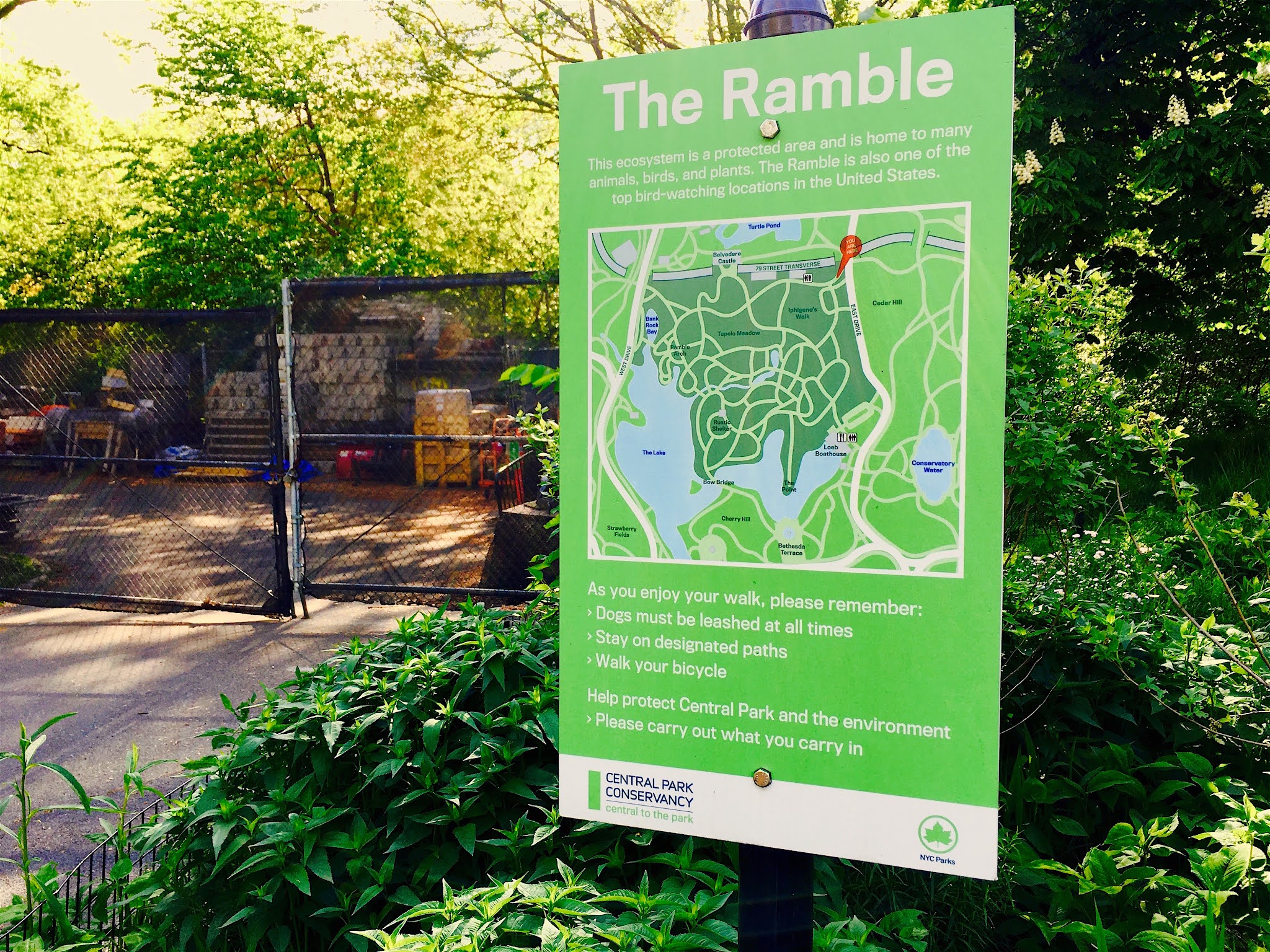
 Today's dish features white meat chicken bolstered with pastrami and bacon. This dish requires some effort to construct so save it for when you really want to create and build something special. It is named in honor of those special areas in big city parks where young men often get lost in nature to express their God given sexual urges. Areas that provide both calming relief from big city pressures along with elements of danger and fresh air excitement. Areas like “The Rambles” of New York City's Central Park.


This is a great dish for a larger group. Presented on a bed of egg noodles and a creamy sauce of mixed vegetables baked right in. Serve it alone or along with a strong green vegetable and some fresh fruit for desert. You will find it's comfort taste hides how truly healthy it is.


 Ingredients:

8 skinless, boneless chicken tenders

½ lbs deli sliced pastrami

8 slices bacon

8 pieces of laughing cow cheese

½ cup ricotta cheese

1 can cream of onion soup

1 can evaporated milk

3 TBS all purpose flour

1 bag frozen mixed vegetables.

Egg noodles


Directions

Preheat oven to 375 degrees F. Line a large baking pan with foil and spray.

Note: if concerned about the bacon, cook it first just until it releases grease but still bendable.


Lay out wax paper on counter. Distribute the pieces of pastrami evenly, top each with a raw chicken tender. Cut each wedge of Laughing Cow in half and lay along side of the chicken.


Wrap up the sides of the beef over the chicken tenderloin. Roll tight. Then wrap each roll with a slice of bacon to hold and place in a sprayed baking pan seam side down.


Proceed until all eight are done.

Sprinkle the frozen mixed vegetables over the casserole.


In a large bowl, mix together the ricotta and the can of soup. Mix the flour into the milk until smooth and whisk into the soup cheese mixture. This will help keep the cheese from separating while baking. Spread this over the top of the mixed vegetables with a spatula.


Bake in the preheated oven for 1 hour. Check with a thermometer for a temp of 160 degrees.

=====

If you wish to cook this in a slow cooker, just create layers of the chicken wraps and top with soup mixture. Cook on low for 6 – 8 hours. Check with a thermometer for 160 degrees. I also like to top it off with a few fresh mushrooms near the end of the cooking process.


For our music: https://www.youtube.com/watch?v=exwknWjpCUk Quiet Village Martin Denny


socialslave

To satisfy and restore.

To nourish, support and maintain.

To gratify, spoil, comfort and please,

to nurture, assist, and sustain

..I cook!


Please buy slave's cookbook:


The Little Black Book of Indiscreet Recipes by Dan White 

 http://www.amazon.com/dp/B00F315Y4I/ref=cm_sw_r_tw_dp_vAT4sb0934RTMvia @amazon


===================================

The Rambles


 In nearly every major city park across the country, there is an area designed to isolate you in nature. A place you can forget that you are in a city. A place of natural surroundings, sights, smells and sounds.

Almost since the parks first opened these have been areas where young men congregate in search of some “natural expressions” of their God given sex drive. This is nothing new. It is in the nature of the male to do this in response to the blasphemous anti-sex teachings and sex shaming of the society's superstitions.


In each park it may be called something different: The Nature Trails, Woodlands, or as is the case of Central Park in New York City: The Rambles.


Due to the nature of “conventional wisdom” we have no way of knowing for sure how long these activities have been going on. We do find a reference to it in Cole Porter's 1935 song: “Picture Central Park without its “sailors”.

The Ramble's invitingly open lawn at the northern end —was called “the Fruited Plain” back in the twenties by those who frequented it and by those who lived near it.


Unfortunately most of these actives occur under the cover of darkness which invites a great amount of danger.


Gay-Bashers

Central Park at night—any part—is dangerous, the gay ghetto of the Ramble is perhaps the section most fear-ridden. Gangs of toughs—teenagers and the macho middle-aged, usually drunk, including a couple of off-duty cops—roam the Ramble at night, engaging in an old American pastime: fag bashing.


You don’t have to be gay. You don’t have to be exposing yourself. You don’t have to be doing anything except walking through the tangled darkness to be abused, shoved, threatened at knife point, kicked, and beaten.


It’s a reflection of what is called the ‘heterosexual presumption,’ If you are straight and meet some girl casually, say, at work, your sexual advances might get a turn down, possibly a slap in the face if you are crude about it. But gay men can’t approach other men they encounter in their day-to-day lives without risking a serious beating, risking their jobs, even risking death.

The discrimination, the fear and hatred of homosexuals ingrained in the culture eliminate most of the opportunities for socialization that exist in the straight world. The openness of the park encourages openness among people,. It’s one of the few places this society allows us to meet each other.


Dr. Money, a pediatrician and past president of the Society for the Scientific Study of Sex, is professor of medical psychology at Johns Hopkins University, chief of its Gender Identity Clinic, and co-editor of the five-volume Handbook of Sexology.


“The folkways of our culture fill our young people with images of homosexuals as sick, evil, less than human. There are so many signals from the home, the school, the church—and from the media—which make homosexuality the daily butt of television humor. They have given such publicity to gays-are-child-molesters campaigns as to legitimize those views in the eyes of our youth.” The law itself epitomizes this attitude. The very fact that our laws make homosexuality a crime validates the idea that ‘queers’ are animals.

“So,” says the doctor, “when teenagers see something evil about themselves, one way to get rid of the evil is to destroy it. It’s an old story, isn’t it?”


As part of their vision of the Park as a refuge, the Park’s designers created a variety of landscapes, included densely planted and wooded areas. Spending time in nature, the designers believed, would help city dwellers relax, benefiting their mental as well as physical health, something that scientists have now proven to be true.

But the shadowy dangers are in sharp contrast to the serenity of the sun-drenched mecca the Ramble becomes for thousands of gay men throughout each day. The sun, the strolling, even the solitude, and the natural beauty of the park—more than the opportunity for a casual sexual encounter in the bushes—are the magnets that have made the Ramble the city’s best-known outdoor gathering place for gays.